The Blue Gem Karambit: Exploring the CS2's Most Expensive Knife

Posted on in CS2
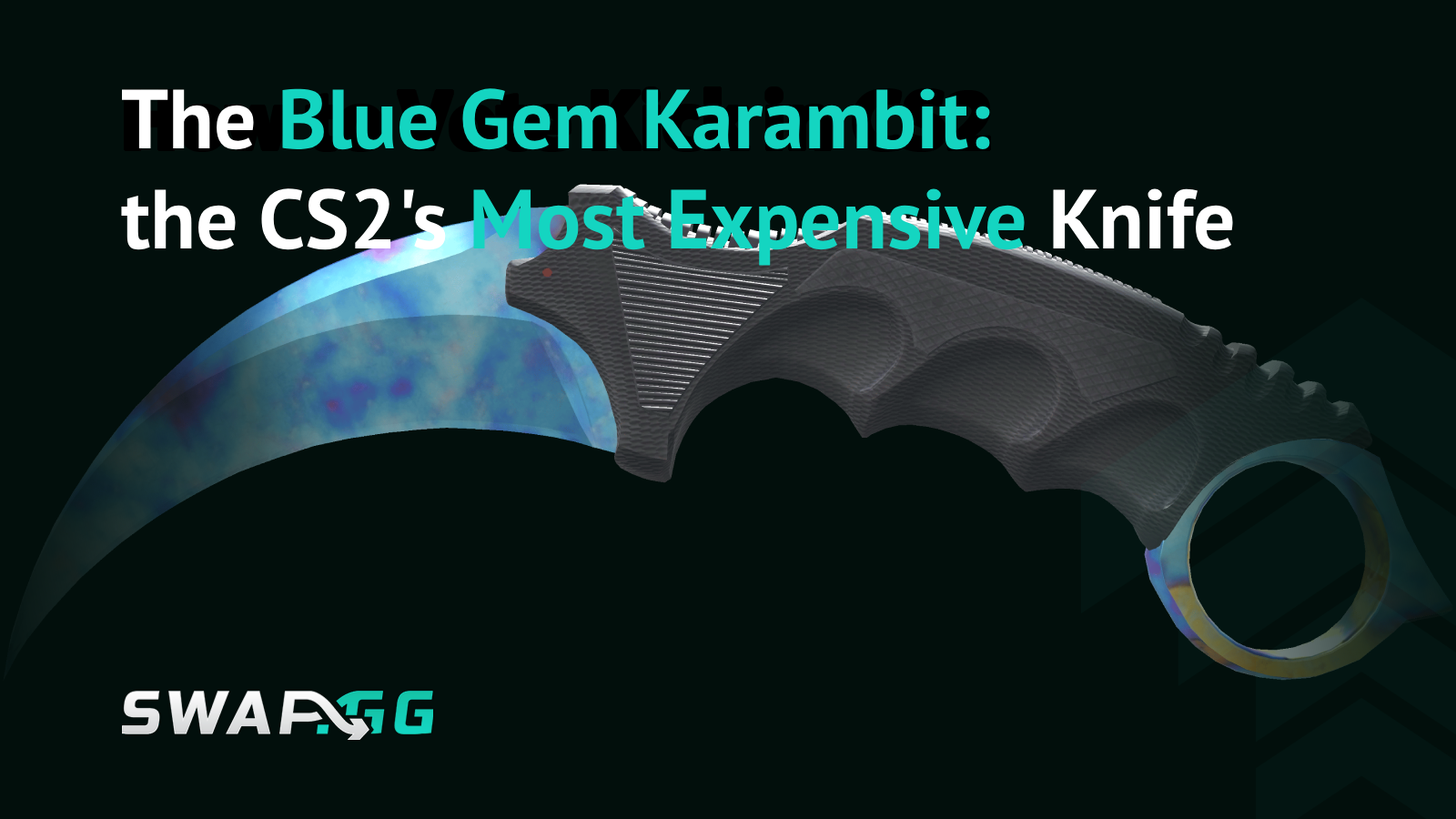
A Factory New Karambit Case Hardened with pattern #387 sold for over $1.5 million. That's the price of a house for a virtual knife.
What makes one pattern worth millions while others barely hit four figures? This guide breaks down the tier system, explains how Case Hardened patterns actually work, and shows you what separates a $2,000 knife from a $200,000 one.
How Case Hardened Patterns Work
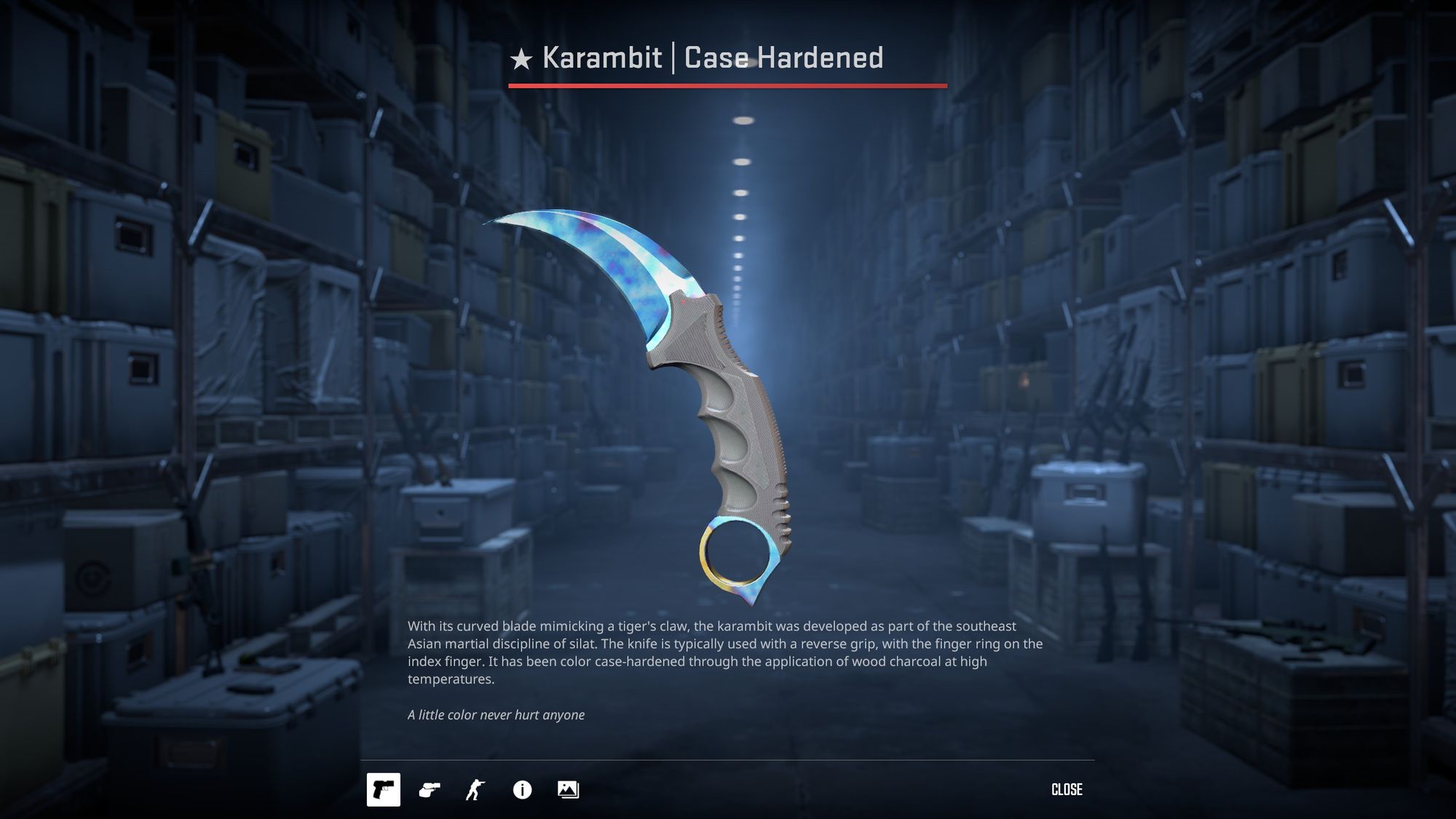
Every case-hardened skin uses a pattern seed between 1 and 1000. That number determines where blue, gold, purple, and silver appear on the blade. The knife template sits over a larger texture map, and wherever it lands, that's your pattern.
The Karambit's curve means certain seeds show more blue on the play side. You can have 70% blue coverage in spots nobody sees and the knife is worthless. What matters is blue where you actually look at it during inspects and gameplay.
Float value affects scratches and wear, but the pattern stays the same. A Battle-Scarred #387 has identical colors to a Factory New #387, just with more surface damage.
Only about 0.3% of Case Hardened Karambits qualify as Blue Gems. That means substantial blue coverage on the play side, not just random blue spots on the backside.
The Blue Gem Tier System
Community traders rank patterns in tiers. Lower number = more blue = higher price.
Blue Gem Pattern Tier Table
Pattern #387 sits alone in God Tier. It has near-perfect blue coverage with almost zero gold or purple contamination. Only nine exist across all wear levels, and only one is Factory New.
Tier 1 patterns like #442 and #269 still have massive blue coverage. These sell for tens of thousands, minimum. By Tier 4, you're looking at 30-40% blue coverage, which starts around $1,000 for Battle-Scarred.
What Actually Affects Price
Three things set the price: pattern seed, float value, and StatTrak.
Pattern seed is everything. A Factory New Tier 1 will cost you a down payment on a house. A Tier 4 might run a few thousand. The market has established clear valuations based on years of trading data.
Float determines the condition. Factory New (0.00-0.07) gives you the cleanest, most vibrant blue with zero scratches. Minimal Wear (0.07-0.15) shows slight dulling. Field-Tested (0.15-0.38) has noticeable wear that can mess with the pattern visibility.
For Blue Gems specifically, Factory New commands huge premiums because the blue looks brightest. A scratched-up Battle-Scarred blue doesn't hit the same way.
StatTrak multiplies rarity. The odds of getting StatTrak from a case are roughly 1 in 10. The odds of unboxing a StatTrak #387 Pattern Blue Gem Karambit are about 1 in 3.6 billion. If someone actually pulled that from a case, it would break the record immediately.
The Unboxing Math
Your odds of unboxing any Blue Gem Karambit sit around 0.001%, which is less than 1 in 100,000 cases. But that's for ANY Blue Gem pattern.
Getting a specific top-tier seed? You first need to hit the 0.26% knife drop rate. Then the Case Hardened finish has to roll instead of Doppler, Fade, or anything else. Then you need one of the roughly 160 Blue Gem patterns instead of the other 840 possible seeds.
The odds of unboxing pattern #387 specifically are around 1 in 387 million.
Most Blue Gem owners bought theirs on the market. Opening cases for a Blue Gem is financially stupid. You'd burn through millions in keys before hitting one.
Why Pattern #387 Hit $1.5 Million
The current owner, a Chinese collector called "青い王" (Blue King), turned down a 1.2 million Euro Bitcoin offer in 2021. That same Bitcoin is worth over $2 million now, and the knife's value climbed right alongside it.
Chinese collectors entered the CS market heavily around 2017-2019. Blue represents luck and prosperity in Chinese culture, so owning the bluest possible knife became the ultimate flex. This demand pushed Blue Gem prices from expensive to absurd.
Pattern #387 has almost complete play-side blue coverage. When you inspect it, you're looking at what the community considers perfection. That's why it sits alone in God Tier while even other Tier 1 patterns go for "only" five or six figures.
Where Blue Gems Come From
Case Hardened Karambits drop from 11 different cases dating back to early CS:GO. The CS:GO Weapon Case, the eSports 2013 Case, Operation Bravo Case, and others all include them. Most of these cases are old, and some don't drop anymore.
Valve hasn't added Blue Gem patterns to new CS2 cases. The existing supply is finite. As knives get trade-locked, scammed, or held by collectors who won't sell, available inventory shrinks. This pushes prices up, especially for top-tier patterns.
How to Actually Buy One
Don't try to unbox it. The math is terrible.
Trading platforms like Swap.gg, CS2Float, and others list Blue Gems with verified pattern seeds and float values. You can inspect the exact knife before purchase and check its wear and color distribution.
Tier 4 Battle-Scarred: $1,000-$1,500 Tier 3: $2,000-$10,000 Tier 2: $10,000+ Tier 1: Six figures depending on float and market conditions
Before buying, verify the pattern seed using inspection tools or float databases. Scammers try to pass off Tier 3 patterns as Tier 1 with misleading screenshots. Always inspect the actual in-game knife through Steam before completing any high-value trade.
Investment Potential
Blue Gem Karambits have shown consistent price growth over the years. High-tier patterns where supply is severely limited hold value better than most skins. The #387 owner's refusal to sell at $1.5 million shows confidence the price will keep climbing.
That said, skin markets are volatile. Updates, trading restrictions, or shifts in community interest can tank prices. High-tier Blue Gems stay more stable because wealthy collectors treat them as trophies, not liquid assets. They buy to hold.
Lower-tier Blue Gems (Tier 3 and 4) show more price swings based on supply and demand. These patterns are accessible to regular traders, which means more buying and selling activity.
What You're Actually Buying
A Blue Gem Karambit is a status symbol with value based entirely on community consensus and scarcity. It has zero real-world utility. If CS2 servers shut down tomorrow, it disappears.
But that consensus is real, and the CS2 economy has stayed strong for over a decade. Blue Gems sit at the top of pattern-based collecting. Owning one shows you know the market and have the budget to acquire something genuinely rare.
For most players, Blue Gems stay aspirational. The entry point is around $1,000, and the impressive patterns require budgets most people would rather spend on a car. But if you're serious about CS2 skin collecting and have the funds, few items carry more weight than a clean Blue Gem in your inventory.

Posted on in CS2