CS2 New Maps 2026: Callouts, Rotations, and the Anubis Rework

Posted on in CS2
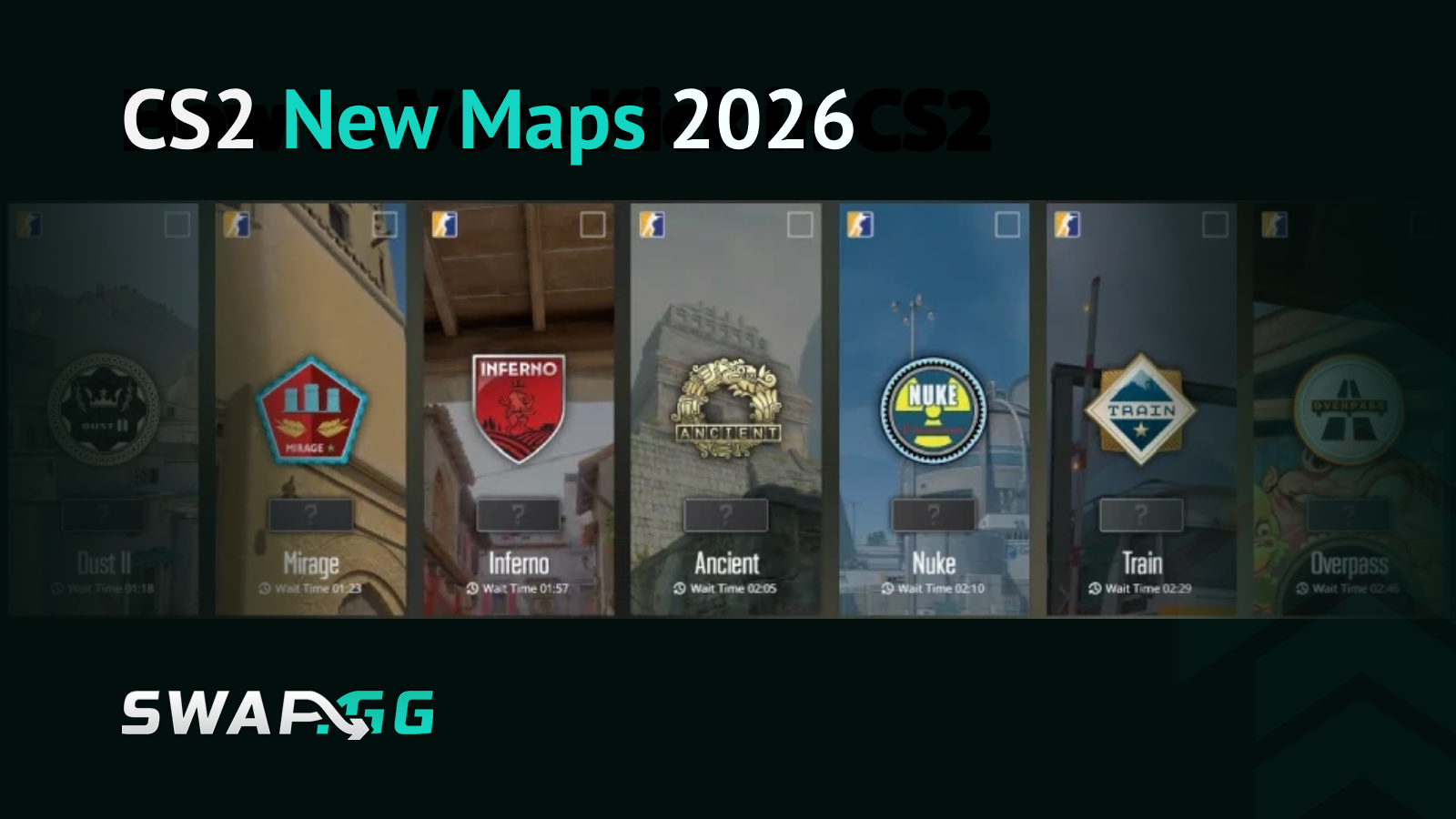
The January 22, 2026 update added five community maps to official rotation and shipped the biggest Anubis layout changes the map has ever seen. Warden, Stronghold, and Alpine landed in Competitive, Casual, and Deathmatch. Sanctum and Poseidon replaced Rooftop and Transit in Wingman. Anubis returned to Premier Season Four with a relocated bridge drop, flipped Mid Doors, a new B-site hole, and reworked A-site cover. This guide breaks down what matters on each map so you're not learning it the hard way in a ranked game.
Warden
Warden is a bomb defusal map built around a prison island layout. Mid control determines everything here. T's who win mid early dictate which site they hit and when. CTs who give it up for free are spending the rest of the round reacting.
Callouts to know:
- Mid sits between the two bomb sites and is the central control point. Whoever holds it can rotate fast to either side.
- Cat is the elevated connector from mid to A. T's use it to reach A without going through Long.
- Long is the slower T-side approach to A, better for lurks than for full executes.
- B Halls is the main T route into B, close-range and punishing for anyone caught without flashes.
CT default: Keep one player contesting mid and one deep in B-spawn. Over-rotating mid when T's are faking Cat is the most common way to give up a free B plant.
T default: Use Cat as a distraction before fully committing to A. Winning mid first gives you the option to rotate to whichever site CTs have abandoned.
Deathmatch tip: Warden punishes passive, conventional peeking. Practice checking second and third-layer cover instead of the obvious spots. Off-angles are everywhere on this map and the players who find them first win duels they have no business winning.

Stronghold
Stronghold is set in a Gibraltar air raid bunker. The elevation changes across the map are the most important thing to understand before playing it competitively. Rotating looks faster on the minimap than it actually is because of height differences between paths.
Callouts to know:
- Connector links mid to both sites and is the most contested area on the map. Whoever controls it consistently controls the round pace.
- Short is the fast mid-to-site route. T's use it after winning Connector to catch CTs out of position.
- Long is the slower outer route, useful for lurks when CTs have committed to one side.
- Stairs exist in multiple spots. Always specify which stairs when calling it out, otherwise the callout is useless.
CT default on Connector: Hold the high side rather than ground level. Playing high limits how many angles can hit you simultaneously and forces T's to clear upward rather than straight in.
T approach: Clear the low side of Connector first to flush the CT off their elevation advantage before committing to the site.
B vs A: B plays close-range and favors trades, A plays longer. Teams that run one weapon profile across both sites are going to feel under-gunned somewhere. Keep SMG and rifle options split across your roster rather than standardizing.

Alpine
Alpine is a hotel-and-resort hostage map, the first new hostage map in official rotation in years. If you haven't played hostage seriously before, the biggest adjustment is that your exit route matters as much as your entry. Getting the hostage and dying on the way out counts for nothing.
Layout: The map mixes open lobby areas with tight corridor sections. T's want lobby control early. CTs who hold the corridors connecting the hostage room to the extraction point can shut down a rescue without ever contesting lobby.
Key angles: The most dangerous spots for T's are inside the corridor sections, not open space. CTs can hold narrow paths with almost no exposure. Flash before entry, not during.
Deathmatch focus: Practice the transition between lobby fights and corridor fights within the same rotation. The movement timing and crosshair placement for a wide lobby angle versus a tight corridor peek are different enough that switching between them mid-round trips players who haven't drilled it.

Wingman: Sanctum and Poseidon
Rooftop and Transit are gone. Sanctum and Poseidon replaced them in January 2026, and both maps play significantly differently from what they replaced.
Sanctum
Sanctum is a vertical jungle temple map with a volcano that erupts the first time C4 detonates in a match. Grenade usage matters more here than it did on Rooftop. Rooftop fights resolved in open-space duels where utility was secondary. On Sanctum, the multi-level bombsite means utility is often the difference between a clean entry and a trade you can't afford in a 2v2.
2v2 positioning: One player takes an aggressive near-entry angle while the other holds a deeper fallback. Both players stacking the same piece of cover is how you lose a 2v1 that should have been even.

Poseidon
Poseidon is a Greek-setting map that's more readable than Sanctum on first play but less forgiving of poor pre-round communication. The site approach options are limited enough that CTs can usually read the T plan within the first few seconds of a push, which makes surprising them almost entirely dependent on how well you've worked out your entry timing and utility before the round starts.
The main difference from Transit is that Poseidon removes safe lurk positions for the T side. Transit let one T stall aggressively while the other set up. Poseidon forces both T's into the same decision at roughly the same time, so coordination matters more than individual timing plays.

Anubis: What Actually Changed
Anubis returned to Active Duty for Premier Season Four with five layout changes, all aimed at reducing the T-side mid control advantage that made the previous version feel skewed. Every change touches either mid or bombsite geometry.
Bridge Drop Relocated to Mid Doors
The drop hole moved from the center of bridge to just outside Mid Doors. CTs no longer have to fight a full attrition battle to keep T's off Drop. T's now need a smoke or an active contest to control it.
Practically: CTs can play active angles closer to doors rather than sitting in static positions that T's had memorized. T's running the same mid default they used before this update will walk into angles that didn't exist previously. Resmoke timings, relearn the angles.
Mid Doors Flipped
The doors are reversed. CTs get significantly more vision into mid before committing, which makes the standard T approach of winning mid through raw pressure much harder to execute. B rotations through Dark are also faster now because of how the new door orientation opens the path.
If your team relied on mid aggression to set up B, that default needs adjusting. The CT holding doors now has more information before they have to make a decision, which shifts the momentum of mid fights earlier than T's are used to.
B-Site E-Box Hole
A hole was cut inside E-box, creating a grenade exchange between E-box and the back of B site. On paper it's a neutral addition. In practice, CTs benefit more than T's from it.
Holding E-box is already a priority CT task for controlling B. The hole lets a second CT support with grenades from the back of site without crossing into exposed ground. T's gain the ability to molotov Ninja more safely, but the net advantage goes to the defending side. If your CT team ran heavy E-box setups, test your grenade timings through the new hole before playing Premier. The geometry has changed enough that old lineups will miss.
A-Site Crates and Scaffolding
The crate that used to sit in the bomb area at ground level has moved to the upper stairs. At ground level it was mainly a T-side post-plant position. At the top of the stairs it becomes a CT-side defensive angle, giving CTs somewhere to play at A without being immediately exposed to a site entry.
Scaffolding was also added to the A-site pillar. Players who used to play tight around that pillar now have to account for someone sitting elevated with different cover. Check the scaffolding before peeking the pillar. Players who don't will donate a free frag to whoever figures it out first.
The overall direction of the Anubis update is clear: CT-side balance without removing T-side viability. The teams that adapt fastest in Premier Season Four are the ones rebuilding their utility lineups around the new mid geometry right now, not after they've dropped a few ranked games learning it the hard way.

Posted on in CS2