CS2 vs CS:GO in 2026, What Changed and What Stayed

Diposting pada di CS2
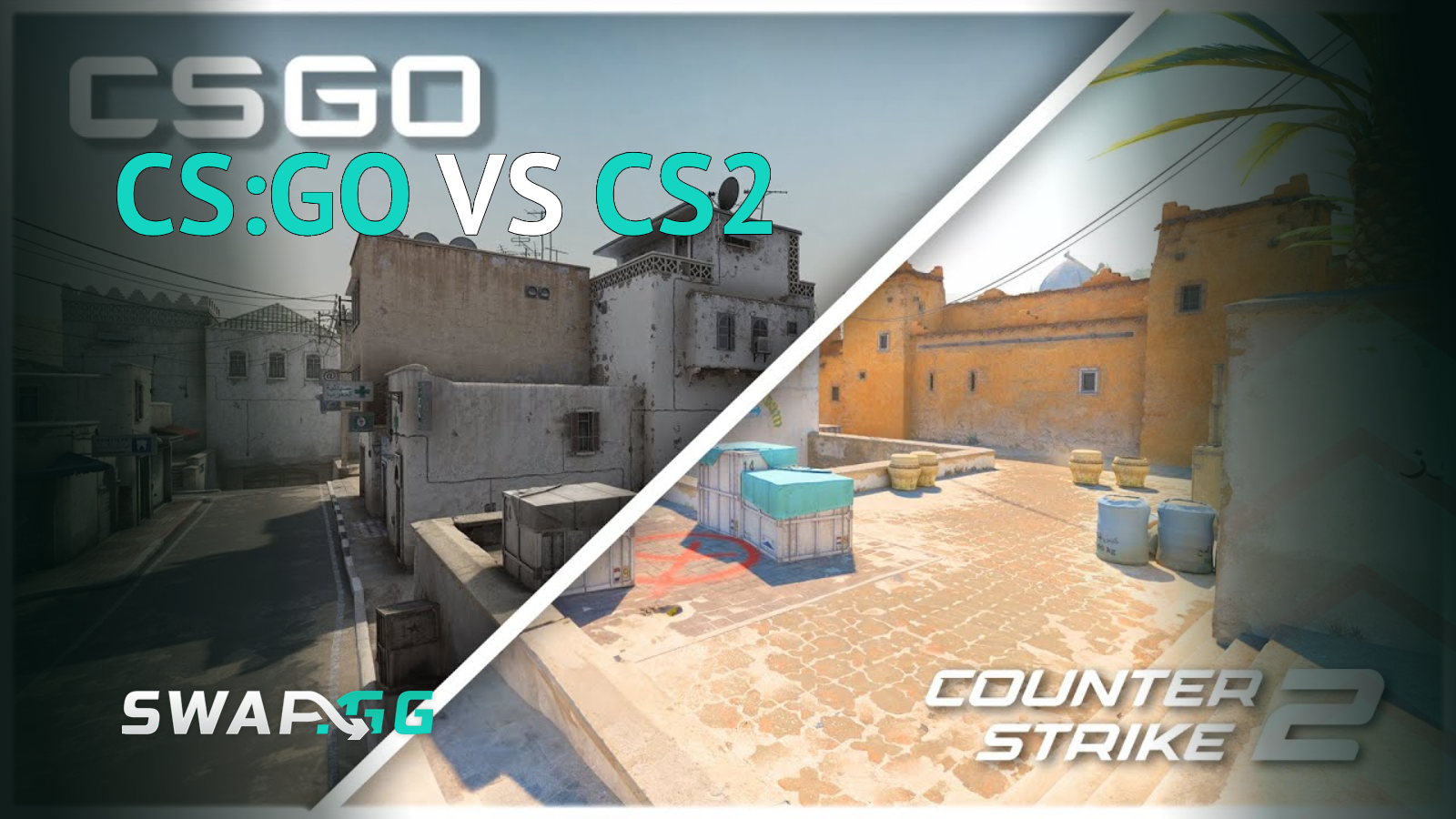
Three years after Valve pulled CS:GO off Steam and dropped Counter-Strike 2 in its place, the arguments about subtick are still running in every comms channel in the game. Plenty of the changes people were loudest about in 2023 turned out to be background noise, and one nobody talked much about reshaped how a match actually feels. You cannot buy or queue into CS:GO anymore, since Valve delisted it in September 2023 and migrated every inventory across, so this was never a question of picking one. It's a question of what you're playing now versus what you remember.
The Engine Swap Is the Foundation Everything Else Sits On
Source 2 replaced the original Source engine, and that single decision drove most of the visible differences. Valve built CS2 on the same engine family running Half-Life: Alyx and Dota 2, bringing modern rendering, physically based materials, and a rebuilt lighting system.
Source 2's updated physics and collision systems changed grenade arcs, smoke interactions, and some body-collision behaviour. Molotovs no longer bodyblock the way they did, and old throws that relied on a precise bounce off a specific surface needed re-testing after launch.
The CPU side is where returning players felt the shift most. CS:GO shipped in 2012 when dual-core processors were standard, and it leaned on one or two cores while the rest sat idle. Source 2 spreads work across modern multi-core chips, though the trade is a higher hardware floor, and pickem-mongolia.com's comparison notes how badly that landed with anyone on an older rig.
Frame Rates Often Went Down
Raw FPS dropped for a lot of players in the transition. On many systems CS2 runs at lower average frame rates than CS:GO managed on the same hardware, particularly at higher visual settings, though results swing hard depending on GPU, CPU, resolution, and map. In one set of comparisons published by geekextreme.com, CS2 landed in the 70 to 165 range against CS:GO's 150 to 180, and those figures describe that test setup rather than a universal rule.
Better lighting and volumetric effects cost frames. On a competitive shooter where people chase very high FPS on purpose, the cost registered immediately.
Subtick Replaced Tick Rounding, and the Debate Never Ended
CS:GO servers processed the game at 64 ticks on official matchmaking, 128 on FACEIT and similar platforms, and every action got rounded to the next tick. Shots, jumps, and strafes updated in discrete steps as a result.
CS2 still simulates on a 64-tick base, but the subtick system records the exact timestamp of each input instead of snapping it to a tick boundary. The server knows when you started moving, when the trigger went down, and when the utility left your hand, rather than approximating all of it to the nearest interval.
Here's the part worth being honest about. Subtick was pitched as the end of the 64-versus-128 argument, and for most of the player base it brought official matchmaking closer to what third-party 128-tick servers had offered. At the top level the complaints about peeker's advantage and inconsistent feel kept coming anyway, and three years of patches have not fully settled them.
The Change That Reshaped Matches: MR12
CS:GO ran MR15, first to sixteen rounds, thirty rounds in regulation. CS2 runs MR12, first to thirteen, twenty-four rounds in regulation, with overtime typically played in six-round halves once a match reaches 12-12.
Three fewer rounds per half sounds minor written down. In practice it compressed the economy, because each loss now costs a larger share of the half and the window for turning a deficit around shrank with it. Digging out of 0-6 is a different proposition when the half ends at twelve.
![CS2 update: MR12 arrives in practice mode; all released maps available in Casual & Deathmatch [UPDATED] | HLTV.org](https://img-cdn.hltv.org/gallerypicture/T_DGBPbWYRp3MyYDikkAe7.jpg?auto=compress&ixlib=java-2.1.0&q=75&w=800&s=60c0f2d5c12d8aa793efe66ff36207ff)
Matches finish faster too, and that changed the rhythm of a session more than any lighting upgrade did. For someone grinding a few ranked games after work, round count sits closer to the actual experience than subtick ever will.
Smokes Became Objects Instead of Textures
CS:GO smokes were static textures that filled a shape and sat there until the timer ran out. CS2 smokes are volumetric objects reacting to the world around them: they expand into whatever space is available, bullets punch holes through them, HE grenades clear chunks temporarily, molotov fire shrinks and burns parts away, and players moving through leave short-lived gaps behind them.
Firing into a smoke to open a sightline became a legitimate play. So did throwing an HE into a choke to buy a two-second window for a push. Old lineups built around a specific texture shape stopped working on release, and a large chunk of community utility knowledge had to be rebuilt from nothing.
Maps Were Sorted Into Three Tiers
Valve did not treat the map pool as one job. The pool got split into three buckets, and thunderpick.io's guide sets out how each group was handled.
- Touchstone maps kept their layouts and received only lighting and player-visibility work, since Valve judged those foundations solid.
- Upgrade maps got full Source 2 lighting, reflections, and physically based rendering without layout changes. Nuke is the example usually cited.
- Overhaul maps were rebuilt from the ground up using Source 2 tools.
Anyone coming back after a long break finds the callouts mostly intact. Surfaces, light, and sightline clarity are what moved.
What Actually Stayed the Same
The economy skeleton survived. You still lose rounds, bank a loss bonus, eco, force, and full-buy on the logic Counter-Strike has run on for two decades, though MR12 and various patch tweaks shifted the round-to-round value of that loop compared with CS:GO.
Your inventory came across whole. Every skin, knife, and sticker migrated automatically at the delist, and Source 2 relit them with new materials rather than replacing anything. For a community where the skin economy had become a large part of why people stayed logged in, relog.gg is right to flag that continuity as one of the more consequential calls Valve made.
The weapon roster, spray patterns as a concept, the bomb-defusal objective, the 5v5 structure, and the callouts across most of the pool all carried forward. Counter-Strike kept its identity through the engine change.
Premier, CS Rating, and the New Interface
Competitive matchmaking with map-specific skill groups gave way to Premier and a single CS Rating number. One rating now represents you across the whole pool instead of eighteen separate ranks handing you contradictory readings on your own skill.
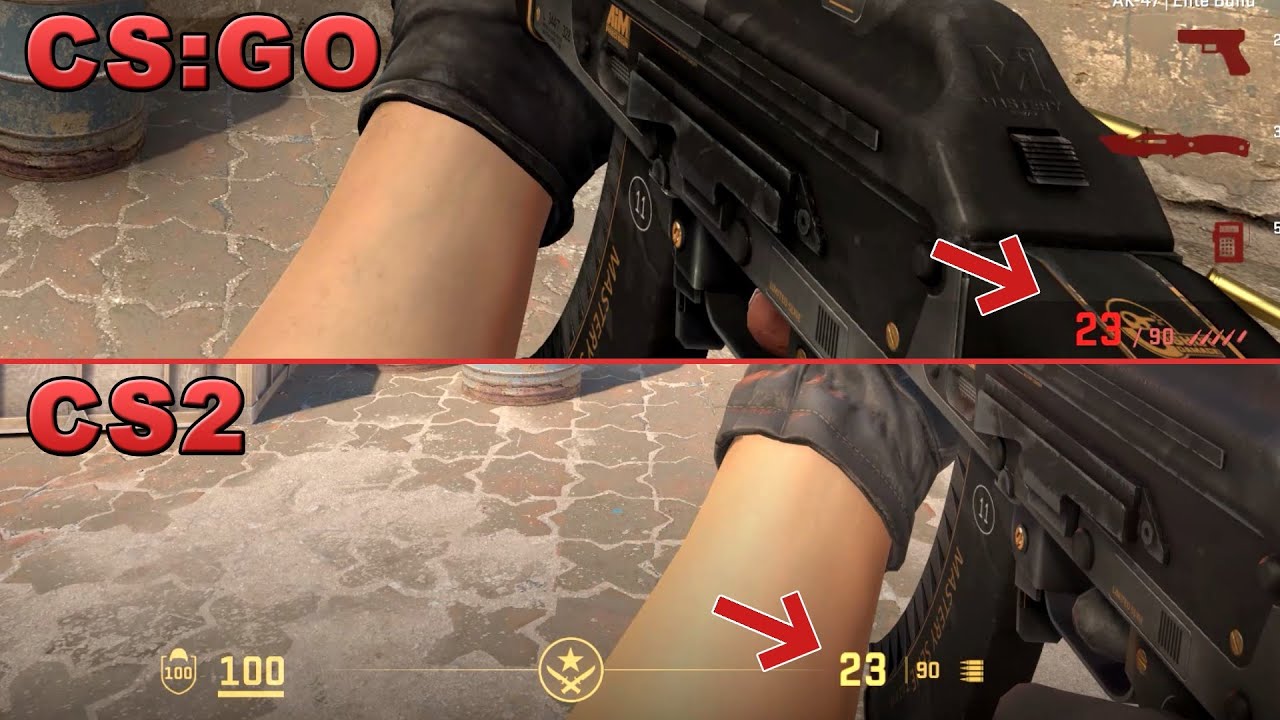
The buy menu went from radial to grid, and loadouts arrived with it, letting you choose which weapons appear in your menu per side. Audio moved to a physically based spatial system with occlusion awareness, so sound now accounts for whatever sits between you and the source.
None of these carry the weight of MR12 or the smoke rework. The interface is what a returning CS:GO player notices in the first thirty seconds regardless.
FAQ
Can you still play CS:GO in 2026?Not as a live game. Valve delisted CS:GO from Steam in September 2023 and replaced it with CS2, and your old inventory transferred automatically. Older builds can run in limited offline or community setups, though nothing resembling official matchmaking exists for it anymore.
Is CS2 harder to run than CS:GO?Yes. Source 2's lighting and volumetric effects raised the hardware floor, and many players see lower average frame rates on the same machine, especially at higher settings. CS2 does use multi-core CPUs far better than CS:GO ever did, so a modern processor closes a good part of that gap.
Did subtick actually fix the tick rate problem?For most of the player base it brought official matchmaking closer to what 128-tick third-party servers offered, since the server logs precise input timestamps rather than rounding to a tick. Complaints about peeker's advantage at the top level never fully disappeared, and Valve has been patching around those cases since launch.
What is the biggest gameplay difference between CS2 and CS:GO?MR12 changed how matches play more than anything else. Twenty-four rounds instead of thirty compresses the economy, makes every loss cost proportionally more, and shortens the runway for a comeback. Volumetric smokes come second, because shooting one open or burning it back with a molotov has no CS:GO equivalent.

Diposting pada di CS2