Should You Play Premier or Competitive in CS2?

Diposting pada di CS2
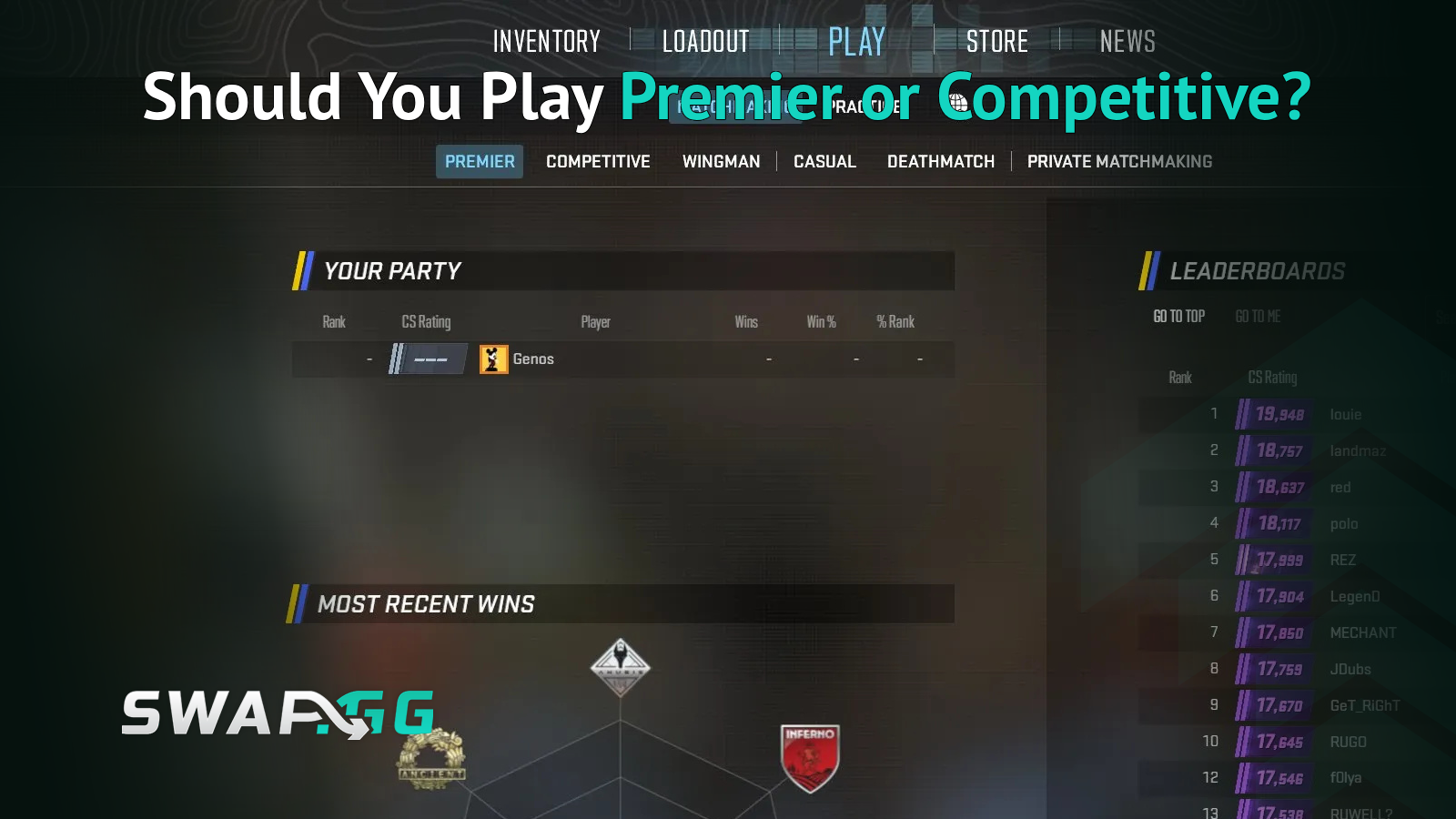
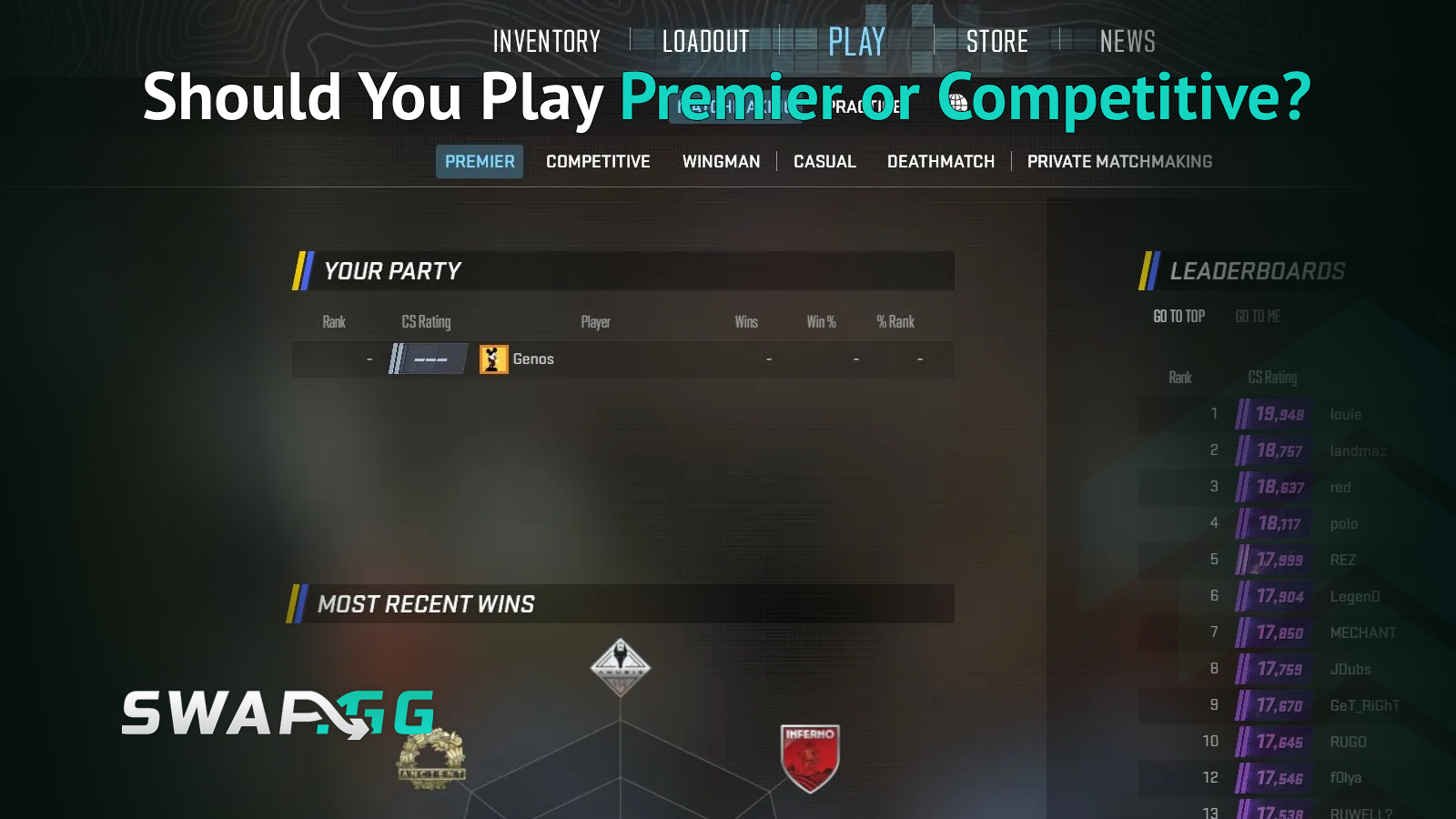
CS2 offers two ranked 5v5 matchmaking modes, and your choice between Premier and Competitive affects which maps you play and how your progress is tracked. Choose Premier if you want a single CS Rating across the Active Duty pool. Go for Competitive if you prefer picking your maps and earning a separate rank for each one. After the September 2026 update, Premier now selects from four nominated maps instead of teams banning down to one, making the difference between the modes clearer. Neither mode will automatically improve your positioning or trading, so pick based on whether you want to play a wider range of maps or focus on specific ones.
Premier vs Competitive in CS2 at a Glance
Premier uses a single numerical CS Rating to track your results, while Competitive gives you a separate Skill Group for each map. Both modes are 5v5 bomb-defusal matches, but the main differences are how you control map selection and how your rank progresses.
Valve’s Steam Support explains that CS Rating and Competitive Skill Groups are separate. The June 25, 2024 update set a two-win requirement to reveal a map’s Competitive rank. Profile Level, which you earn through XP, is a third system. Having a higher profile level doesn’t mean your CS Rating or map ranks have increased.
How Do Ranks Work in Premier and Competitive?
If you want a single number to track your progress in Valve matchmaking, Premier is the simpler choice. Competitive is better if you’re confident on maps like Dust II but still learning others like Nuke.
Premier Has One CS Rating
Your CS Rating is used for Premier matches across the Active Duty pool. Valve made this a visible number with regional and global leaderboards, and you need ten wins to get or reset your rating, according to their seasonal rules. Wins or losses in Competitive don’t affect your Premier CS Rating.
Premier alsPremier has seasons too. Season Five started on July 8, 2026, when Cache was added to Active Duty and Overpass was removed. Valve gives out Premier season medals to players who meet requirements like getting wins, having an active rating, and keeping their account in good standing. These medals are a goal to work toward, but they don’t reflect your actual gameplay improvement.ve Gives You a Rank on Each Map

CS2 Competitive ranks use the familiar SkiCS2 Competitive uses the usual Skill Groups, from Silver I to The Global Elite, but each map has its own rank. For example, your Mirage rank and Nuke rank can be different because you earn them separately. Winning a Competitive match on Mirage only affects your rank for that map, not your Premier CS Rating.two wins on a map in June 2024. Its January 21, 2026 update adjusted underlying per-map matchmaking ranks and expired existing displayed Skill Groups until players earned the required wins again. A missing badge does not mean your earlier matches never counted.
There’s no official way to convert between the two systems. Your Premier rating can’t be directly matched to a specific Competitive badge, since each mode uses different matchmaking pools and progression rules.
How Do You Choose Maps in Premier and Competitive?
You’ll notice the difference in map choice before the game even begins. In Competitive, you pick which maps you want to play when you queue. In Premier, teams nominate maps, and the match map is chosen from those nominations.
Premier Uses a Four-Map Draw
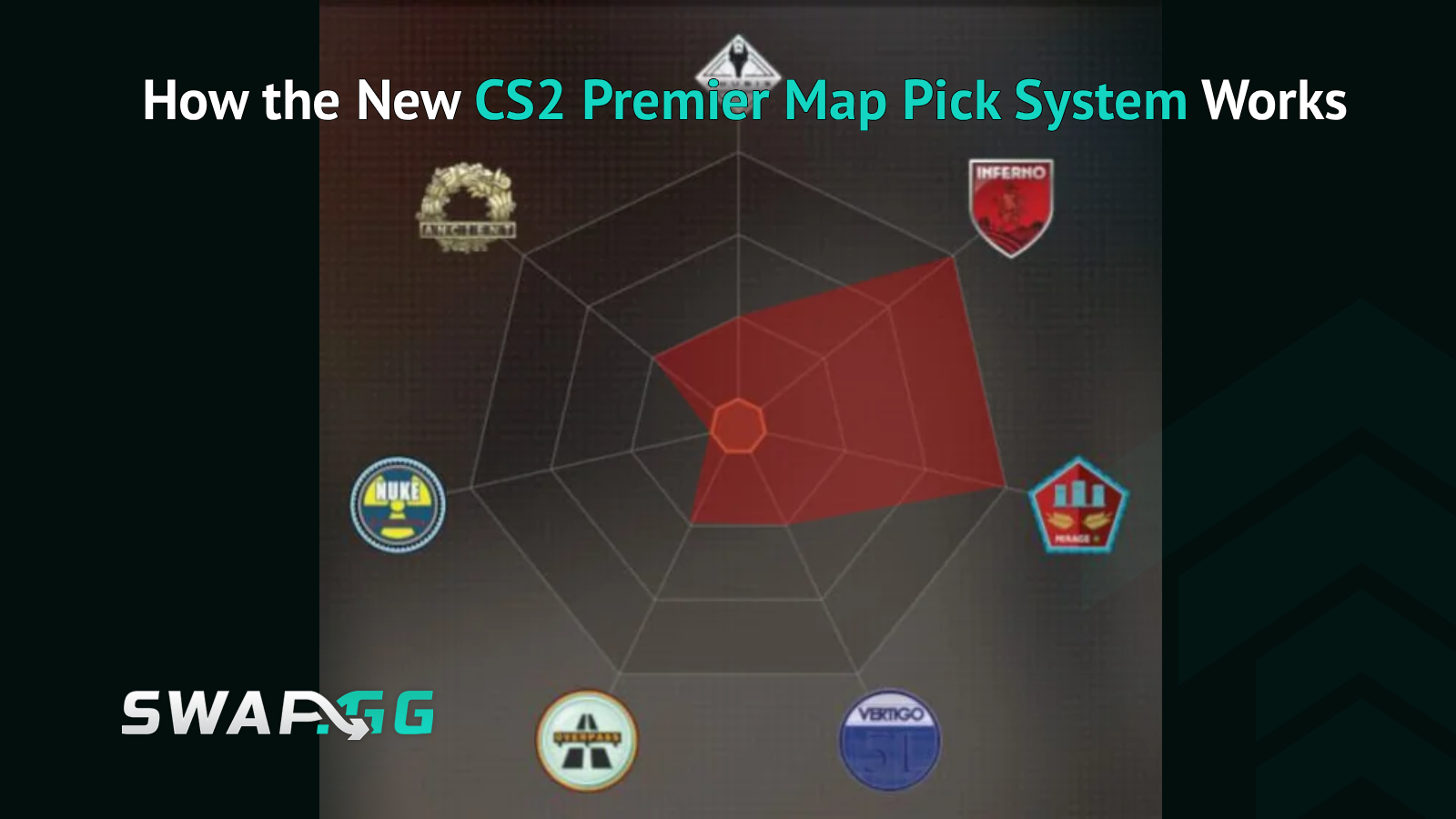
On September 22, 2026, Valve changed Premier’s map selection. Now, Team 1 nominates one map, Team 2 nominates two, and Team 1 adds a fourth. CS2 randomly picks the match map from these four. Valve hasn’t explained if each map has an equal chance or how duplicates are handled, so we can’t assume every map has a 25% chance.
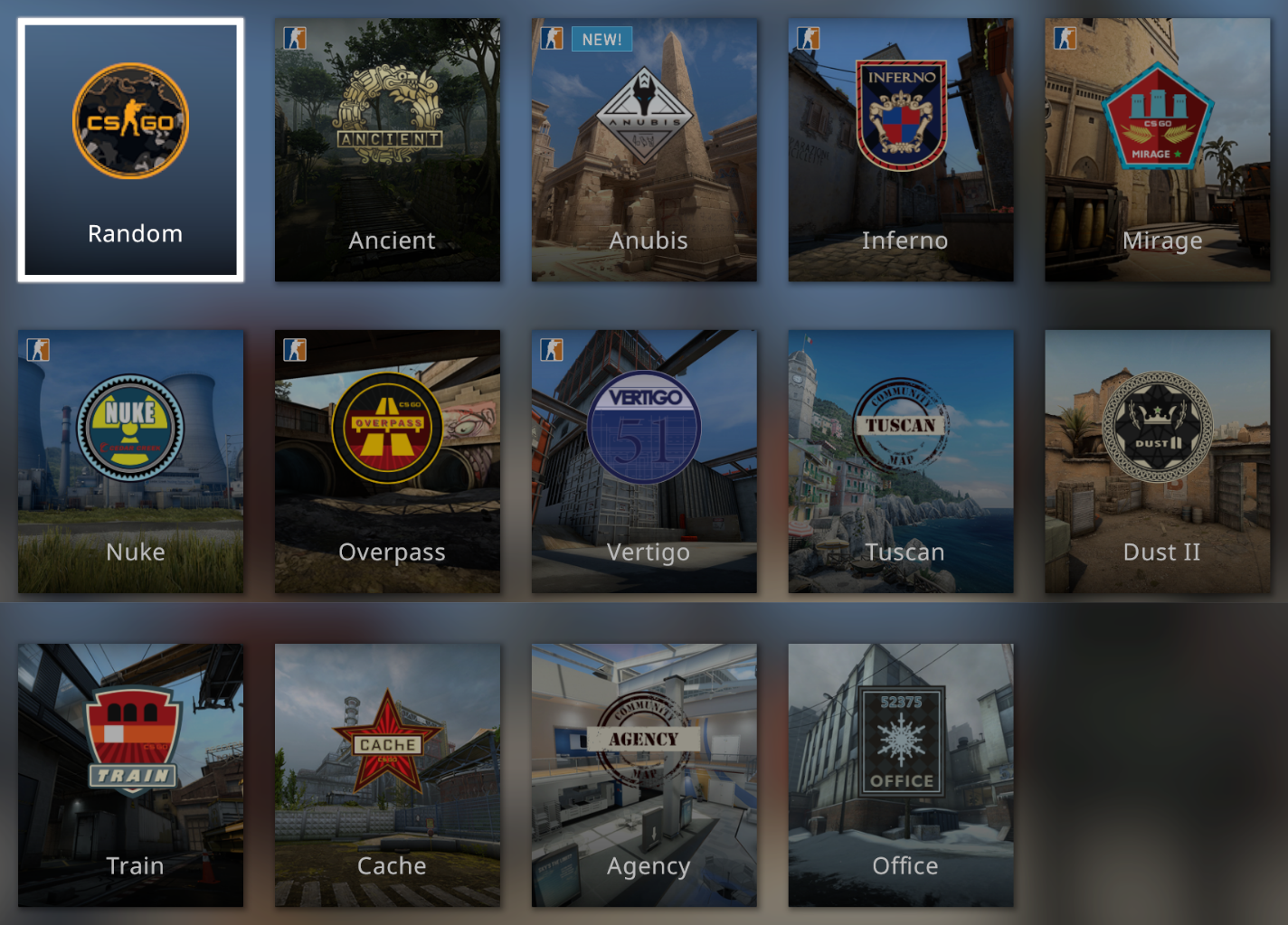
The Season Five Active Duty pool includes Ancient, Anubis, Cache, Dust II, Inferno, Mirage, and Nuke. You can nominate a map you’re comfortable with, but the other team might pick one you’d rather skip. It’s more helpful to know the basics of all maps in the pool than to just memorize one Mirage smoke and hope you get lucky.
Competitive Lets You Pick Your Queue Maps
Competitive gives you more control. You can pick Mirage if you want to practice mid control, or add more maps for variety. You decide what maps you’ll play before matchmaking, instead of voting after the lobby forms.
Competitive’s map pool can include maps that aren’t in Premier’s current Active Duty rotation. On July 8, 2026, Valve added the community maps Boulder, Fachwerk, and Shelter to Competitive, Casual, and Deathmatch, but not to the seven-map Premier rotation.
If you’re trying to learn, playing the same map over and over is a real advantage. You can practice CT rotations, common flashes, and problem spots without spending half your session on maps you didn’t want to play.
Do You Need Prime for Premier or Competitive?
You need Prime Status and Profile Level 10 to play Premier. You can play Competitive without Prime, but Steam Support says non-Prime accounts don’t get Competitive Skill Groups, CS Ratings, match XP, or weekly care packages.
Prime players can earn ranks and XP, and they’re matched with other Prime players. If a Prime player queues with a non-Prime friend, Steam Support says the group will be placed in the non-Prime matchmaking pool. The non-Prime player still won’t get a displayed rank.
New players are often confused by the difference between Profile Level 10 and ranked placement. Level 10 lets you access Premier if you have Prime, but you need Premier wins to get your CS Rating. You can reach Level 10 by playing XP-earning modes, even if you don’t have a Competitive Skill Group yet.
If Premier is locked, check your Prime Status and profile level before thinking you need more Competitive wins. Valve’s requirements are about your account and profile level, not about reaching Gold Nova or any other map rank.
Is Premier Harder or More Competitive?
Premier is Valve’s most visible ranking system, with a public CS Rating, leaderboards, and seasonal progress. Competitive still uses skill-based matchmaking, and sometimes a Competitive lobby can be tougher than an easy Premier match. The mode name doesn’t guarantee how skilled your next opponents will be.
In a March 2026 r/GlobalOffensive thread, players said they use Competitive to learn maps and focus on their Premier rating as their main number. These are just personal preferences, not proof that all Competitive games are casual or that Premier always has better teammates. Valve’s Steam Support page clearly says Competitive is skill-matched.
There are good reasons to keep playing Competitive even after you unlock Premier. Repeating the same map can help you spot weaknesses, like late B rotations, poor trading, or using utility too late. Premier tests you on more maps, but you have less control over which weaknesses you practice each session.
The same idea applies to XP. Prime players get match XP in official matchmaking modes, and this XP goes toward your Profile Rank, not your CS Rating or Competitive Skill Groups. Neither rank shows which mode gives XP faster.
Which CS2 Mode Should You Play?
Choose the mode that fits your goal for the day. You can play Competitive seriously while working on a weak map, or enjoy Premier with friends without stressing over every loss.
If You're New to CS2
If you’re still learning callouts, how the economy works, or when to rotate, start with Competitive. Queue for a few maps, learn the common spots on both sides, and build from there. Competitive offers real matchmaking and ranks for Prime players, so you’ll still be learning to win proper 5v5 games.
Once you know the basics of a few Active Duty maps and meet the Prime and level requirements, Premier is a better way to test how well you adapt. You don’t need to earn any specific Competitive badge first.
If You Solo Queue
Competitive is great if you have a specific practice goal. If your Nuke CT side isn’t working, you can queue Nuke and focus on it without hoping for a Premier draw. Premier is better for players who want to track one rating across different teammates and maps, as long as they’re comfortable communicating on any map.
Neither queue guarantees good communication or balanced teams every time. The best choice is the one that encourages you to review your mistakes, rather than blaming the mode if a game doesn’t go well.
If You Play With Friends
A group that knows several maps might like Premier, since shared callouts and utility plans work across the Active Duty pool. Newer groups can benefit from Competitive by focusing on one map until everyone learns their spots, setups, and rotations.
You don’t have to stick to just one mode. Use Competitive to improve on a weak map, then play Premier to see if your progress holds up when the map is picked and the opponents play differently.
FAQ
Is Premier Better Than Competitive in CS2?
Premier is best if you want to track a single CS Rating across Valve’s Active Duty map pool, with leaderboards and seasonal progress. Competitive is better for picking specific maps and earning separate ranks. If you’re still learning rotations and utility, it makes sense to start with Competitive. Neither mode promises easier opponents.
Can You Play CS2 Competitive Without Prime?
Yes. According to Steam Support, free players can join Competitive matchmaking, but non-Prime accounts do not get Competitive Skill Groups, XP, or weekly care packages. To play Premier, you need Prime Status and Profile Level 10, so non-Prime play alone is not enough.
How many wins do you need for a CS2 rank?
Valve says you need ten wins in Premier to get or reset your CS Rating. In Competitive, you get a Skill Group after two wins on a specific map, according to the June 2024 rule. Your visible rank can expire or need recalibration, and Premier and Competitive progress are tracked separately.
Does Competitive affect your Premier rating?
No. Valve keeps Competitive Skill Groups and Premier CS Rating as separate rankings, each based on its own mode. Losing a Competitive match does not lower your CS Rating. This makes Competitive a good way to practice maps without risking your Premier number.

Diposting pada di CS2