Most Expensive CS2 Knives in 2026: Top 10 Rare Knives and Patterns

Опубліковано у CS2
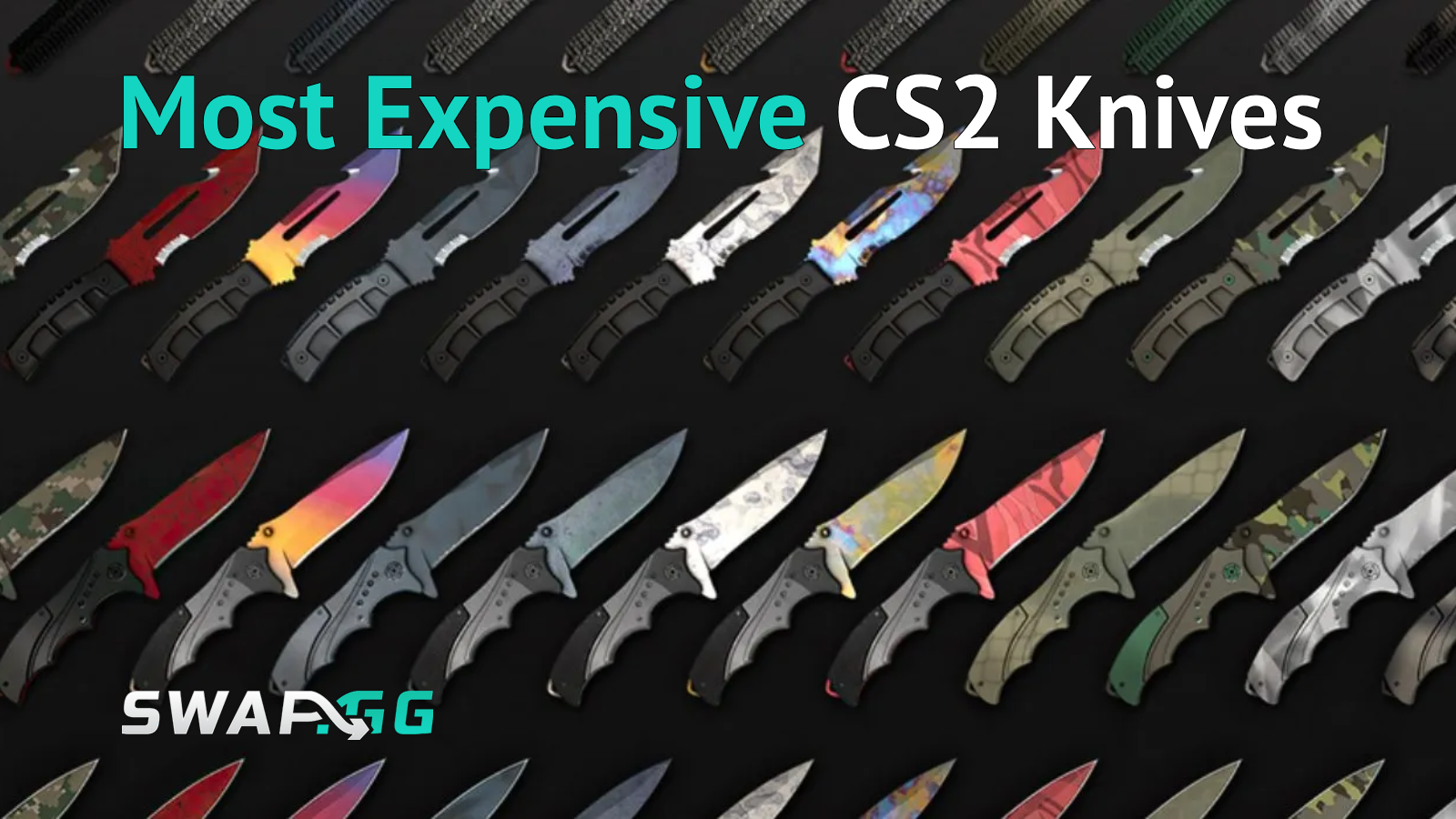
Since Valve's October 2025 update, trade-up contracts can produce knife outcomes from Covert-tier inputs, which changed the market by adding a non-case route to knives while leaving the rarest collector patterns effectively untouched. Common knife prices fell sharply in the days that followed. The knives below moved in the opposite direction, or barely moved at all, for the same underlying reason in every case: nothing about the new system lets a player target a specific pattern, gem percentage, or fade gradient on demand.
How the October 2025 Update Reshaped This Market
CS2's updated Trade Up Contract allows five Covert-rarity skins to produce a knife or glove outcome, with the result drawn from the collection or collections your inputs came from. Using StatTrak Covert inputs produces a StatTrak knife result, since gloves do not exist with StatTrak at all. The exact final item, model, finish, wear, and pattern within that collection's pool, remains determined by the contract's built-in randomness. There is no mechanism to choose a specific outcome.
That distinction is the entire reason this list exists in its current form. The contract guarantees you walk away with a knife or glove rather than nothing, and it narrows which collection that item draws from based on your inputs. It does not let you choose a specific pattern seed, a specific gem percentage, or an exact fade result, which is precisely the gap that determined which knives held value and which did not. Float still works the way it always has in trade-ups, calculated from the average float of your five inputs, so a Factory New result requires five low-float Covert skins going in.
Common knives and gloves crashed by as much as 70% in the days following the update, as the market priced in future crafting supply before that supply had even fully materialized. Specific collector items and high-demand finishes whose appeal depends on a pattern or gem outcome the system cannot guarantee stayed resilient or, in some cases, became more sought after as that scarcity became more visibly permanent.
The Outlier: A Knife in a Category of Its Own
Before any ranked list, one knife needs to be addressed separately, because comparing it directly against the rest of the market on the same basis misrepresents how thin that market actually is.
Case Hardened patterns are assigned a seed between 1 and 1000 that determines where blue, gold, and purple appear on the blade. Only about 0.3% of Case Hardened Karambits qualify as genuine Blue Gems, meaning substantial blue coverage specifically on the play side visible during inspects and gameplay, not just random blue spots on the back. Pattern #387 is the bluest known seed on the Karambit, with the one widely reported Factory New copy carrying a float of 0.0480.
The Karambit Case Hardened Blue Gem, especially pattern #387, is generally treated as the most valuable CS2 knife because of its extreme scarcity and collector demand, but its headline value is based on reported offers and community consensus rather than a verified public sale. That knife is reported to belong to a private Chinese collector known as "Newb Rage" (青い王, "Blue King"), who reportedly rejected an offer of 1.2 million euros in Bitcoin in 2021. That ownership and offer history is widely repeated across independent trading sites, but it should be treated as reported history rather than confirmed fact, since no public sale record exists to verify it. The $1.5-2 million figure circulating across the community reflects that reported offer and ongoing collector consensus, not a transaction anyone can point to.
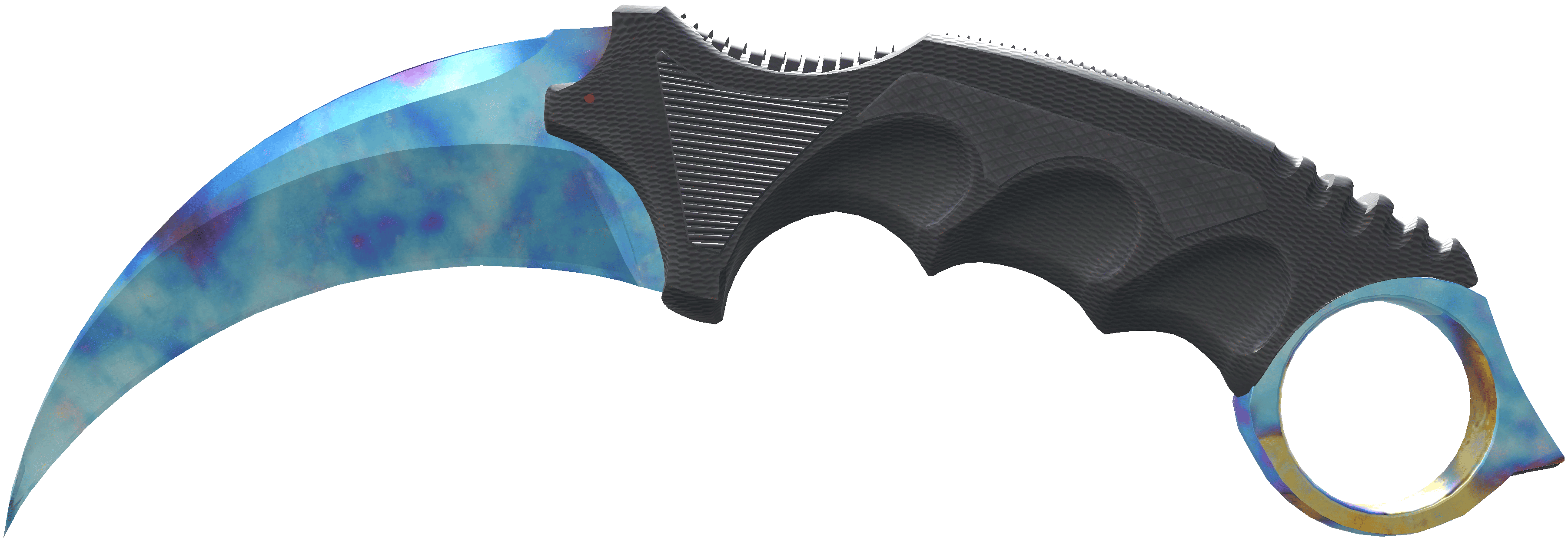
The exact odds of unboxing pattern #387 are not publicly standardized, and estimates vary widely across sources, from roughly 1 in 387 million to over 1 in 660 million, with at least one separate figure cited specifically for a StatTrak version of the same pattern. These numbers likely reflect different underlying assumptions about drop rate, finish roll, and pattern pool size, and none of the sources publish the calculation behind their figure, so no single number here should be read as authoritative. What every source agrees on is that opening cases is not a remotely sensible path to this knife, and that nearly every known Blue Gem owner purchased theirs directly on the market rather than unboxed it.
The Rest of the Top Tier: Liquid Market Items
Below the Blue Gem sits a genuinely different category: knives that trade actively enough on real marketplaces that a price range can be reasonably stated, even though that range still moves with float, exact pattern, and platform. Prices below are approximate, platform-dependent, and can change quickly.
The order from the Gamma Doppler Emerald downward is not a stable ranking and shifts depending on float, exact pattern, and which platform's listings you check on a given day. Treat entries in the middle and lower half of this table as a cluster of broadly comparable value rather than a fixed sequence, since the gap between any two adjacent entries here is often smaller than normal day-to-day market movement.
Why Butterfly and Karambit Dominate
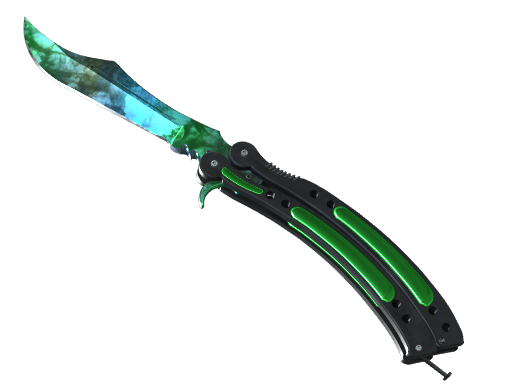
The Butterfly Knife is the most popular CS2 knife by trade volume and search demand, and its flip animation is part of why it commands a premium across nearly every price tier, from entry-level finishes up through the Gamma Doppler Emerald near the top of this table. The Karambit's curved blade and inspect animation carry similar status, and the two models together account for most of the entries above.
That popularity has a direct effect on pricing independent of pattern rarity. A model with stronger baseline demand means even its rare gem and pattern variants get bid up further by a larger pool of interested buyers, which compounds the scarcity premium rather than just adding to it.
Gem Finishes vs. Pattern Finishes
The items in this market split into two distinct categories of rarity, and the difference matters before buying into either.
Gem finishes (Doppler Sapphire, Doppler Ruby, Gamma Doppler Emerald) come from a small, bounded set of possible Phase variants on Doppler and Gamma Doppler skins, where the gem versions, full blue, full red, or full emerald, are rarer outcomes among a known, finite number of possibilities. The Gamma Doppler Emerald trades in a comparatively tighter range because the gem outcome is a known category rather than an open-ended pattern lottery, which is part of why these are often called the "safer" high-tier knives.
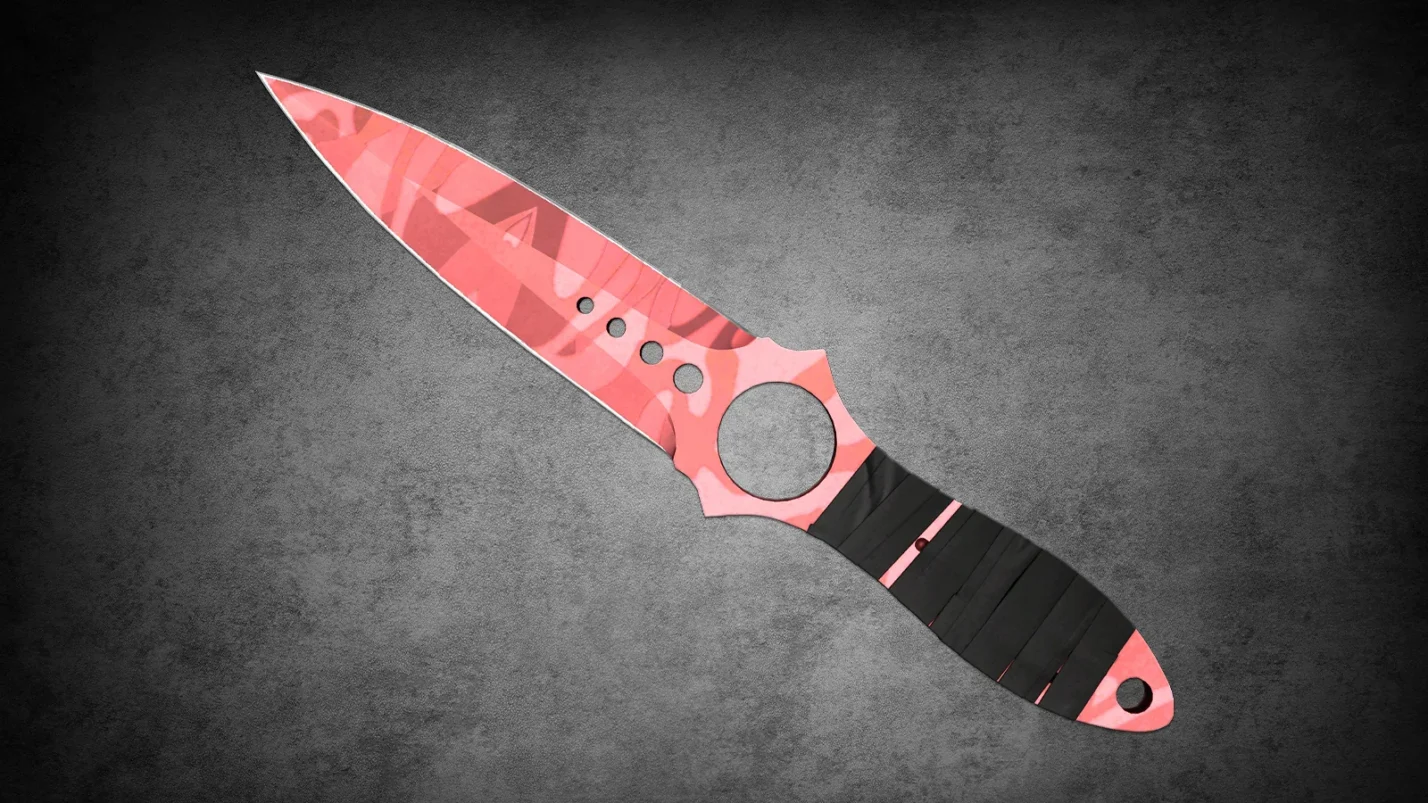
Pattern finishes (Case Hardened Blue Gem, Crimson Web, Fade percentage, Marble Fade red tip) are driven by a seed value with hundreds or thousands of possible outcomes, where only a small fraction land in the visually desirable range. This is the higher-ceiling, higher-variance category, where the gap between a mediocre roll and a near-perfect one within the same finish can be a hundred times the price, which is exactly the dynamic that separates the liquid top tier from the Blue Gem sitting alone above it.
What Actually Drives Price
Four factors combine to determine value across this market, applied in a consistent hierarchy.
Base rarity sets the floor: every knife comes from the same Gold tier with roughly a 0.26% drop rate from a case, so the model itself starts at the same baseline scarcity. Model then adjusts that floor significantly, with Butterfly, Karambit, and M9 Bayonet commanding premiums over less popular models purely on demand. Finish availability narrows supply further, since gem finishes like Sapphire, Ruby, and Emerald only exist in Factory New and Minimal Wear, tightening usable supply compared to finishes available across all five wear conditions. Pattern or seed is the final and most volatile factor, capable of moving price by orders of magnitude within the same model and finish.
Float interacts with all of the above rather than acting independently. For a knife as rare as #387, even a small difference in float translates to a price difference of thousands or, at the very top of the market, hundreds of thousands of dollars, since every fraction matters more as base rarity climbs.
A Permanent Two-Tier Split
The market isn't collapsing as a whole, but it has undergone a structural shift, and the price gap between common red-rarity inputs and gold-tier outputs has compressed significantly since the trade-up update. What that compression created is two separate markets operating under the same "knife" label.
The first tier covers items the trade-up system can narrow you toward: common Doppler phases, Tiger Tooth, and Marble Fade finishes where the buyer is not chasing an exact pattern seed or gem percentage. Prices in this tier dropped sharply after October 2025 and have stayed lower. The second tier is everything covered above, the specific patterns, gem percentages, and fade gradients the trade-up system cannot target no matter how the inputs are chosen. Valve hasn't added Blue Gem patterns to new CS2 cases, and the existing supply is finite. As knives get trade-locked, scammed, or held by collectors who won't sell, available inventory only shrinks further, which has tended to push prices in this tier up even as the broader knife market cooled.
FAQ
What is the most expensive CS2 knife in 2026? The Karambit Case Hardened pattern #387, often called the "Blue Gem," generally treated as the most valuable CS2 knife with an estimated value of $1.5 to $2 million. That figure reflects a reported rejected offer and ongoing community consensus rather than a confirmed public sale, since no verified transaction record for this specific knife exists.
How did the October 2025 trade-up update affect knife prices? It let five Covert-rarity skins produce a knife or glove outcome narrowed to the input collections, which crashed common knife and glove prices by as much as 70% in some cases. Pattern-driven and gem-tier items held or gained value because the system cannot guarantee a specific pattern, gem percentage, or fade outcome within its randomized pool.
Why are Butterfly and Karambit knives so dominant on expensive knife lists? Both models carry strong baseline community demand independent of any specific finish, driven by their flip and inspect animations. That demand compounds with finish rarity, so the same gem or pattern outcome tends to sell for more on a Butterfly or Karambit than on a less popular model.
What are the odds of getting a Blue Gem Karambit pattern #387? The exact odds are not publicly standardized, and estimates vary widely across sources, from roughly 1 in 387 million to over 1 in 660 million, likely reflecting different assumptions rather than one agreed calculation. Every reliable source agrees that opening cases is not a realistic path to this pattern, and nearly all known owners purchased theirs directly on the market.
Can a trade-up contract produce a knife like the ones on this list? The trade-up system can narrow the outcome pool toward a knife model and general wear range based on a defined collection, but it cannot guarantee a specific Case Hardened pattern seed, a specific gem percentage, or a specific fade gradient. Those are assigned randomly and independently when the item generates, which is exactly why the knives in this article kept their value while common finishes did not.

Опубліковано у CS2