What the CS2 Skin Bid-Ask Spread Means for Your Cash-Out

Geplaatst op in CS2
A CS2 skin might have sold for $120 in the past, but the best cash offer now could be $96. The bid-ask spread shows the gap between the highest buy offer and the lowest asking price on the same market. To know how much you can cash out, check the order quantity, selling fees, and payout method. A recent sale shows what someone paid before, not what you’ll get today.
What Is the CS2 Skin Bid-Ask Spread?
In a marketplace that displays both buy and sell orders, the bid is the price a buyer offers, and the ask is what a seller wants. The difference between the highest bid and the lowest ask is called the spread, before fees.
The bid-ask spread is the difference between the highest buy price and the lowest selling price for similar items on the same marketplace. You can show it as a dollar amount or a percentage. This is different from selling and withdrawal fees.
If the ask is $115 and the bid is $96, the spread is $19, which is 16.5% of the ask price. Some tools use the bid as the base for the percentage, so make sure you compare percentages calculated the same way.
Why Doesn't the Last Sale Match Today's Highest Bid?
The last buyer has already finished their purchase. If a skin sold for $120 before, it’s normal to see a $96 bid and a $115 listing now, since buyers and sellers are always making new offers at different prices.
Steam Community Market shows the sale history for supported items, including median prices on its charts. The median is based on all completed sales in a period, not just one last sale. Cash marketplaces may have their own recent sales lists, with different buyers, payment methods, and fees.

Also look at the details of each item. Two skins with the same name and wear grade can still have different floats, patterns, or sticker crafts. A special copy might sell for more than regular listings, while a generic buy order might not consider those extras. So, a premium sale isn’t a good baseline for a regular copy.
Recent completed sales are usually better evidence than unsold listings, but after a sharp market move, a current bid with real depth can be more useful than an old sale.
How Much Cash Do You Keep After the Spread and Fees?
Your CS2 skin cash-out price is what you can withdraw after all sale costs. The spread changes the sale price, and commission and payout fees lower what you keep.
The numbers below are just examples for a cash marketplace. They are not real-time quotes or Steam Community Market prices.
The 5% commission here is just an example for a cash marketplace, not Steam’s fees. With these rates, if the $115 listing sells, you’d get $18.05 more than if you took the $96 offer, before withdrawal fees. But you only get that extra money if someone actually buys at $115. The $91.20 from an instant sale is 24% less than the old $120 sale, but the $28.80 difference comes from both price changes and selling costs, not just one fee.
Calculate sale price × (1 − cTo figure out your net, multiply the sale price by (1 minus the commission rate), then subtract payout or currency conversion fees. If the instant-sell quote already includes the platform’s margin, don’t subtract it again. Always check the final amount on the confirmation screen.t Depth Before Selling?
The highest buy order might only be for one item, even if other buyers have similar bids. Market depth shows how many items buyers want at each price. This matters most when you’re selling several copies.
If you have four identical items and fill the offers in order, you’d get $363 before fees: one at $96 and three at $89. That’s an average of $90.75 per item. To sell all four at $96, you’d need four buyers at that price. The actual result depends on matching rules and whether the orders are still open.
Check How the Marketplace Matches Orders
Steam’s Community Market FAQ says that for commodity buy orders, the oldest qualifying order gets priority when several orders match a new listing. Valve changed this rule in 2017, so the highest displayed order isn’t always the price you’ll get. Don’t assume this rule applies to every individually listed skin or to third-party cash marketplaces.
Some cash marketplaces only show active seller listings and recent sales. If there’s no published list of buy orders, you can’t reliably see how many bids are available. Check if the site gives you a real offer and what you’d get after costs. Same Skin Variant
Match the weapon, skin, wear grade, StatTrak or Souvenir status and marketplace. Rare floats, patterns or sticker crafts need similarly specified sold comparisons. Generic bids can overlook those premiums.
Is Selling on Steam the Same as Cashing Out?
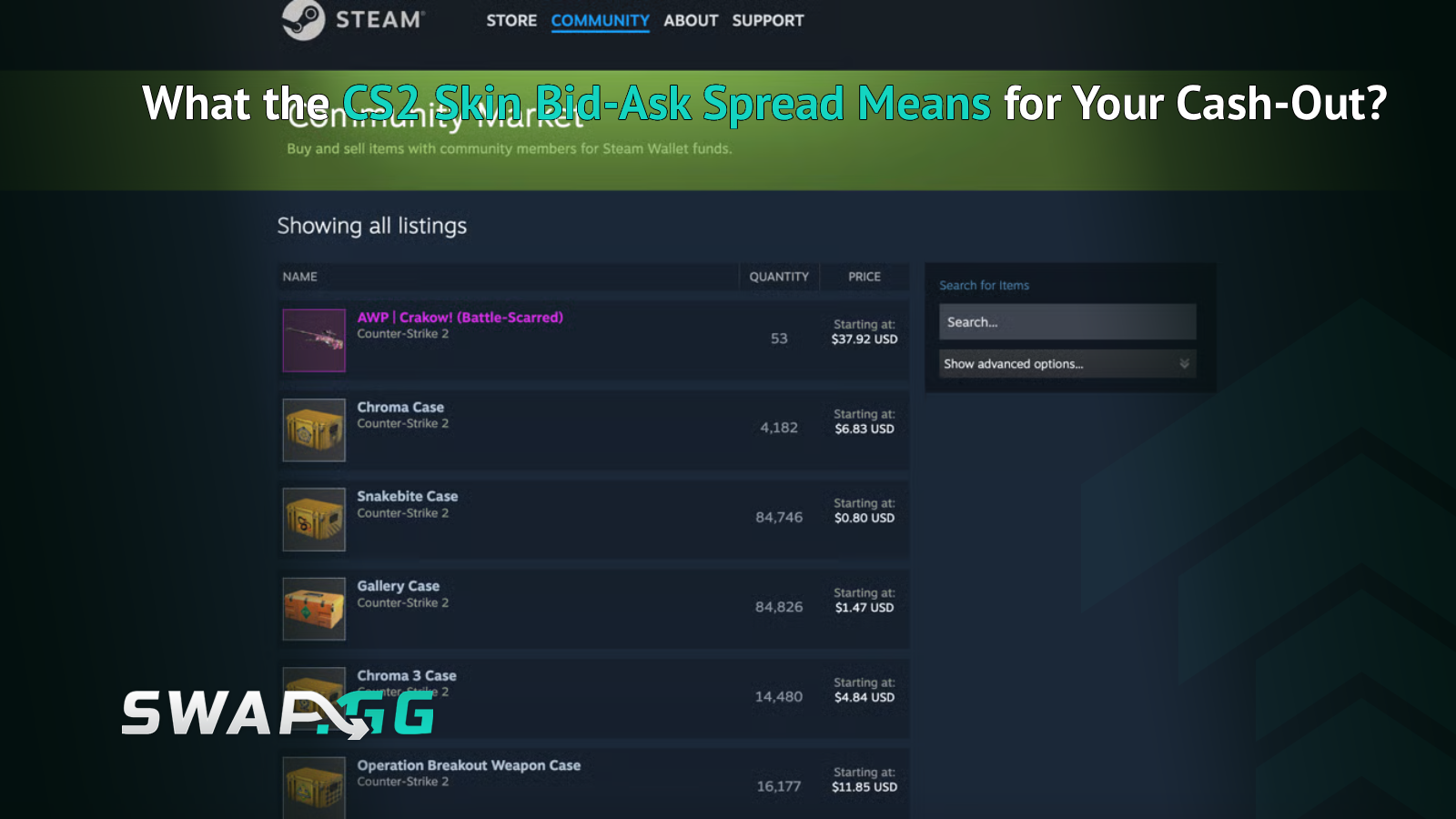
When you sell on Steam Community Market, you get Steam Wallet funds. Valve says you can’t withdraw these to a bank account or send them to a third-party account. So, a Steam sale price isn’t the same as cash you can withdraw from a cash marketplace.
On the Steam Community Market, Steam adds a 5% transaction fee and Counter-Strike 2 adds a 10% game-specific fee on top of the seller's proceeds. The buyer pays the resulting total, while the seller receives the confirmed net amount in Steam Wallet funds. Valve's Community Market FAQ documents both rates and identifies the buyer as the payer of the Steam transaction fee. Minimum fees and rounding can affect small transactions, so use the interface's actual buyer pays and you receive figures instead of subtracting a flat 15% from the visible price.
Cash marketplace fees are different. Look at the offer you can accept or the price you can list at, then check the selling commission, payout fees, exchange rate, and how long withdrawals take. The cash price shown on a marketplace and Steam’s buyer-inclusive price can’t be directly compared.
Swap.gg says it sets prices based on sales volume, popularity, and recent sales. Its support pages explain that Instant Sell payouts are sent seven days after the item transfer, while trade balance can’t be withdrawn as cash. Accepting an Instant Sell quote and actually getting withdrawable funds are two different steps, so always check the payout terms for your transaction.
Should You Accept a Bid or List Your Skin and Wait?
For a frequently sold skin, compare the neFor a skin that sells often, compare the net cash offer you can get now with what you might get from a realistic listing if it sells. Instant sell means taking a current offer, while listing could get you more, but there’s no guarantee of a buyer. Those details can attract a buyer willing to pay more, but there is no sale deadline. A high last sale means little if it involved a different variant or an older market.
If you want withdrawable money, use the current eligible cash offer as your starting point, then decide if waiting for more is worth it. For multiple items, check how many you can actually sell at the top bid instead of multiplying by your inventory. Before accepting a trade, double-check the offer and recipient in Steam, and see if any trade restrictions could affect delivery or payout timing.
FAQ
What Is a Good Bid-Ask Spread for a CS2 Skin?
No single percentage fits every skin. Even a small spread can hide low liquidity if the top bid is for just one item and the next is much lower. Look at recent cash sales on the same market, buy order quantities, and net proceeds. For rare patterns and sticker crafts, make more specific comparisons.
Can I Cash Out a Skin at Its Last Sale Price?
Yes, if another buyer is willing to pay that amount on a cash marketplace. A completed sale doesn’t mean there’s an ongoing offer, and fees will lower what you get. Compare the sale date, float, pattern, and wear with your own skin. Steam sales pay in Steam Wallet funds, which can’t be withdrawn.
Is the Highest Buy Order the Price I'll Receive?
Not always. The top offer might only be for one item, might not include your variant, or could be gone before you sell. On Steam, the oldest qualifying order gets priority when several buy orders match. Always check the sale confirmation and the net amount you’ll get.
Is Instant Selling Better Than Waiting for a Buyer?
Instant selling means taking an available offer right away, without waiting for a listing to sell. Waiting and listing might get you more for a rare float or pattern, but there’s a chance it won’t sell. Compare the net proceeds and how long payouts take. Swap.gg says Instant Sell payouts are sent seven days after the item transfer is done.

Geplaatst op in CS2