CS2 Spray Pattern Guide 2026: AK-47, M4A4, M4A1-S & More

Diposting pada di CS2
A handful of coaching sites claimed the AK-47 spray pattern got a "complete overhaul" in April 2026, with the first 10 bullets supposedly clustering tighter than before. The April 21, 2026 patch notes say the opposite: "Adjusted camera motion due to recoil to match CS:GO more closely. Bullet trajectories should continue to match CS2." I found no official source describing a genuine change to the AK-47's actual recoil pattern that month, which means the visual feedback changed and the underlying pattern did not.
Myth vs. Reality: What Actually Changed in 2026
A separate part of the same April 21 patch fixed aim punch, the camera kick from being shot, so the full effect now applies regardless of network latency, where it previously could be muted by a bad connection. Aim punch and recoil camera motion are two different mechanics, both adjusted in the same update but not the same thing, and conflating them is part of how the "overhaul" rumor likely spread. Outlets that tracked the patch closely read it the same way: the screen shakes more like it used to in CS:GO, while shots land where they always did.
A spray pattern is the repeatable recoil path a weapon follows when fired continuously, and the rendering of that path got smoother on May 22, 2025, when Valve changed how rendered viewangle adjustments due to recoil are calculated, moving from a per-tick basis to a per-frame basis. Before that patch, camera movement from recoil and the viewmodel's own movement updated at different rates, creating a jittery, inconsistent visual feel, especially at higher frame rates where the mismatch became more noticeable. That change smoothed the rendering pipeline. It did not change the recoil math or where bullets land, both of which stayed tied to the server tick the same way they always have.
A third change worth knowing about hit in September 2025. The Show Off update, released September 17, introduced subtick adjustments that disrupted spray pattern consistency for a short window, prompting criticism from professional players. Valve corrected it on September 19, restoring the spray behavior players had before the regression. This was a temporary spray-consistency regression rather than any kind of pattern redesign, and it was corrected ahead of two Tier 1 events that same week.
What this means for your muscle memory: nothing has moved under your feet in 2026. The patterns you learned a year ago still apply, and what changed across all three updates is how clearly your screen communicates the recoil that was already there.
How CS2 Spray Patterns Actually Work
Definition: A spray pattern is the repeatable recoil path a weapon follows when fired continuously, identical for a given weapon under the same conditions every time. Spread is a separate layer of small bullet randomness around your actual aim point, influenced by movement and how far into the magazine you are. Pattern is something you fully learn through repetition. Spread is something you manage by controlling distance and movement, since no amount of practice removes it entirely.
Confusing these two is the most common beginner mistake. The same weapon fired the same way produces the same vertical climb and horizontal sway each time, which is why recoil is learnable at all. Spread sits on top of that and means even near-perfect recoil compensation does not guarantee every bullet lands exactly on target, particularly while moving or late into a magazine.
Follow Recoil is a crosshair setting, found under Settings, Game, Crosshair, that makes your crosshair move dynamically to show where your next bullet is actually going to land based on the weapon's current recoil position, instead of staying static in the center of your screen. Weapons with aggressive recoil like the AK-47, M4A4, and M4A1-S show the most visible movement with this enabled, since their patterns travel the furthest.
The tool genuinely speeds up learning because it turns a feel-based skill into a visual one, letting you watch the crosshair trace the path instead of imagining where your bullets are headed. The tradeoff shows up once you already know a pattern. Players who have internalized the movement subconsciously can experience a "double compensation" effect, correcting for the visible crosshair on top of muscle memory they already trust, which throws off precision rather than helping it. The vast majority of professional players do not use Follow Recoil in official matches, treating it as a training wheel to graduate from rather than a permanent setting.
A practical way to use it: turn Follow Recoil on while first internalizing a new weapon's pattern, then turn it off once you can spray a tight group on a wall without watching the crosshair do the work.
Weapon-Specific Spray Patterns
Every weapon follows roughly the same logic: a vertical climb phase that is easiest to control, followed by a horizontal phase demanding faster correction. The breakdowns below are approximations built from multiple testing sources rather than frame-perfect canon, since exact transition points vary slightly source to source and the shift itself is gradual rather than a hard switch.
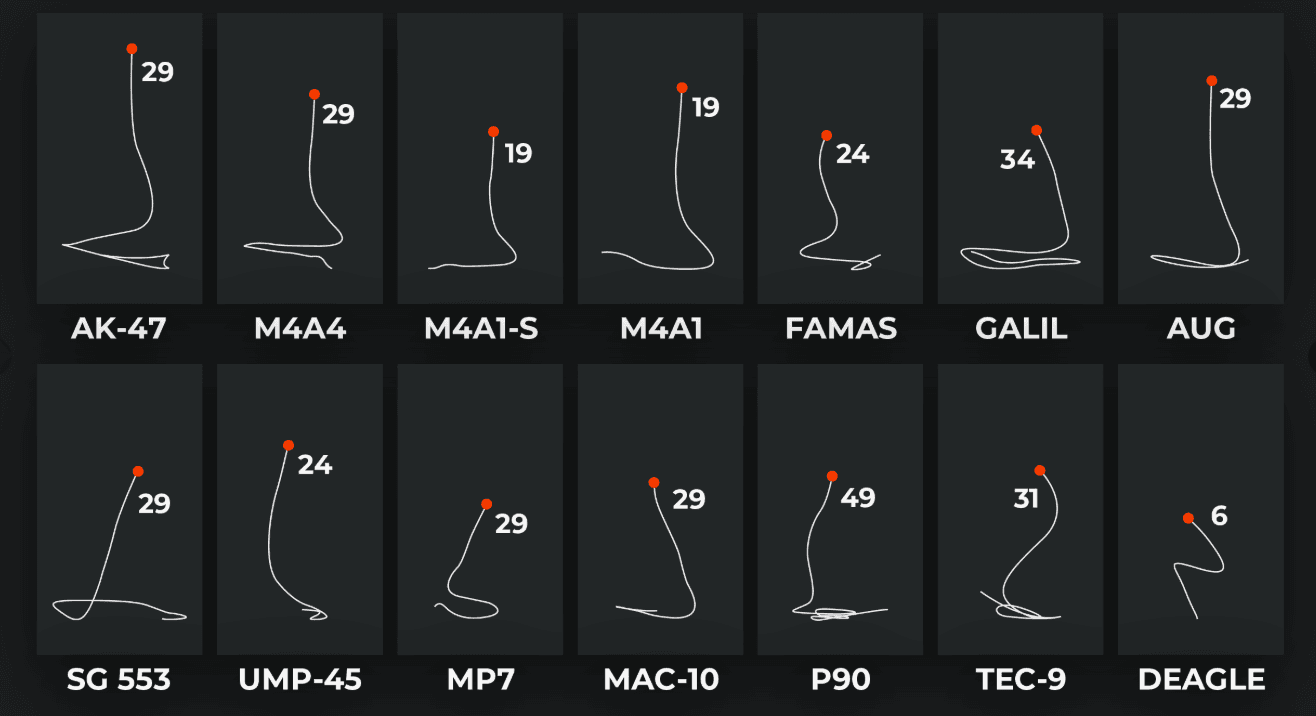
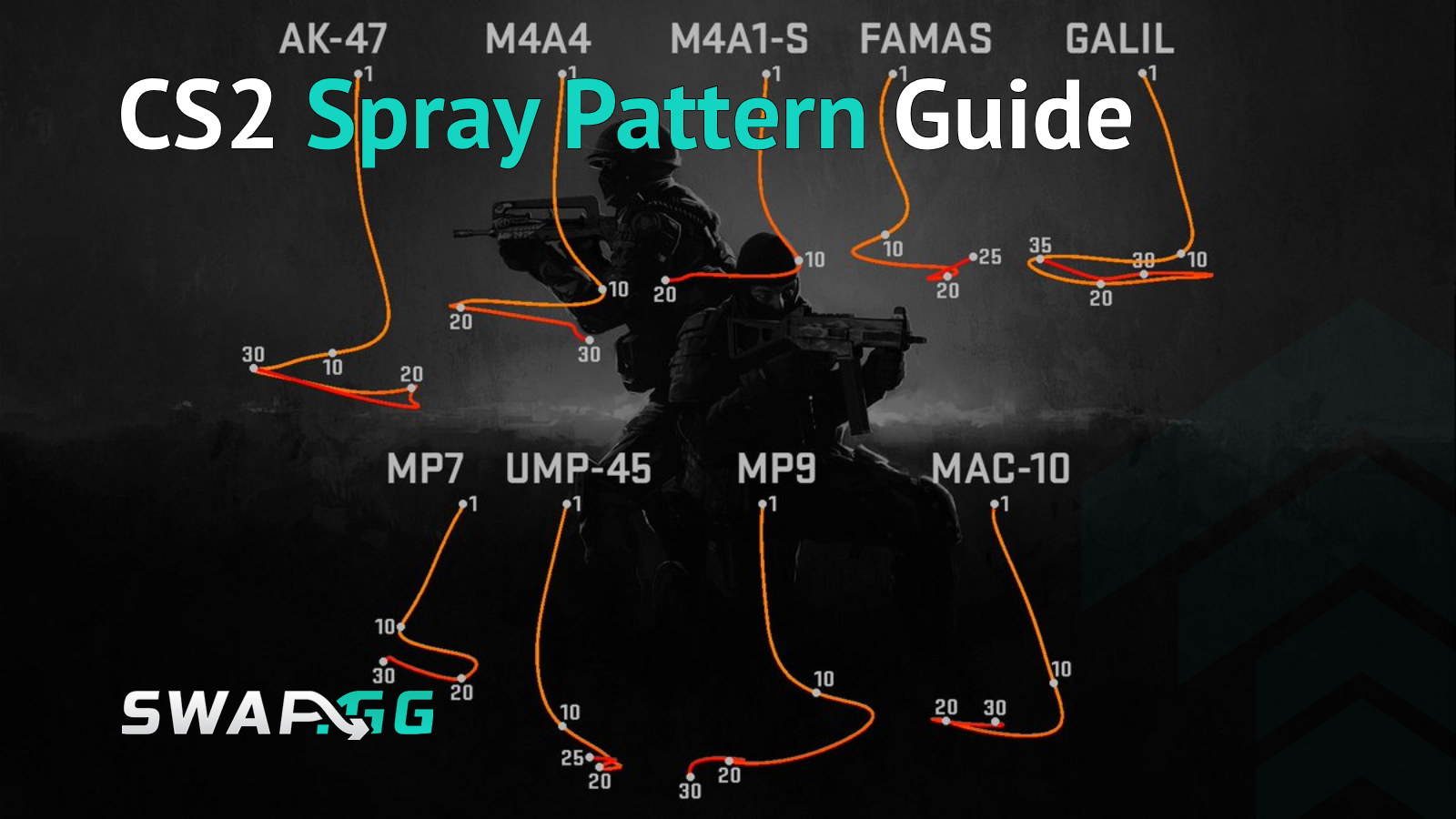
AK-47: The first roughly 8-10 bullets climb in a tight, mostly vertical line, deciding most real gunfights since few engagements run past 10 rounds. After that the pattern typically curves right, then reverses left, settling into a zigzag for the rest of the magazine. Pull straight down for the opening bullets, shift to pulling left as the rightward curve hits, then right again as it reverses.
M4A4: Fires at 666 rounds per minute and carries 30 rounds in the magazine plus 90 in reserve, giving it more sustained-fire capacity than the M4A1-S. Its recoil value sits at roughly 23, noticeably harder to control on long sprays than the M4A1-S, and starts to feel closer to the AK-47 the longer the spray continues.
M4A1-S: Fires at 600 rounds per minute with 20 rounds in the magazine plus 80 in reserve, trading ammo capacity for control. Its recoil value of roughly 21 is lower than the M4A4's, and the first 5-7 bullets travel almost straight up with minimal horizontal drift, making it one of the more forgiving rifles in the game once that opening climb is under control. The suppressor adds reduced tracers and quieter shots as a tactical bonus on top of the easier spray.
FAMAS: Climbs mostly vertically with an early lean left, then settles into left-right adjustments through the rest of the burst. Its lower price makes it a common force-buy rifle, and its pattern is generally regarded as more approachable than the AK-47's for players still building recoil fundamentals.
Galil AR: The first several bullets rise vertically before horizontal deviation kicks in, requiring a down-then-right-then-left correction sequence. Considered one of the more demanding budget rifle patterns specifically because the horizontal transition arrives with less warning than the FAMAS gives.
MAC-10: A loose, fast vertical climb paired with quick horizontal wobble, exaggerated by its high fire rate. Effective range drops sharply, making it most reliable inside roughly 5 meters, where the fire rate compensates for limited long-range precision.
MP9: Behaves similarly to the M4A1-S in shape but compresses the same movements into a faster sequence due to its higher fire rate, requiring quicker correction over a shorter window.
UMP-45: Generally regarded as the simplest pattern among the SMGs and rifles, with moderate vertical recoil and gentler side-to-side movement, making it a common pick for players still building fundamentals before moving to rifles.
When to Tap, Burst, or Spray
The general range logic holds across most weapons: spraying tends to outperform tapping at short distances, tapping shines at long range, and the choice in the middle distances depends on the specific weapon and your personal recoil compensation proficiency. A clean way to remember it: tap at long range, burst at mid range, spray at close range.
Inside roughly 10 meters, full sprays are generally the stronger option since the time saved by not resetting between bursts tends to outweigh the accuracy loss from continuous fire. Between 10 and 25 meters, short controlled bursts of 3-5 bullets followed by a brief reset tend to outperform a continuous spray, since recoil accumulates faster than most players can compensate for at that distance. Beyond 25 meters, single taps or very short 2-bullet bursts tend to be more reliable, because spread at that range makes sustained spraying inconsistent even with strong recoil control.
Long sightlines like A-long on Dust 2 or mid on Inferno are clear real examples of where tapping tends to win out over spraying, since the distance is long enough that recoil compensation alone struggles to overcome accumulated bullet spread.
How to Practice Spray Control
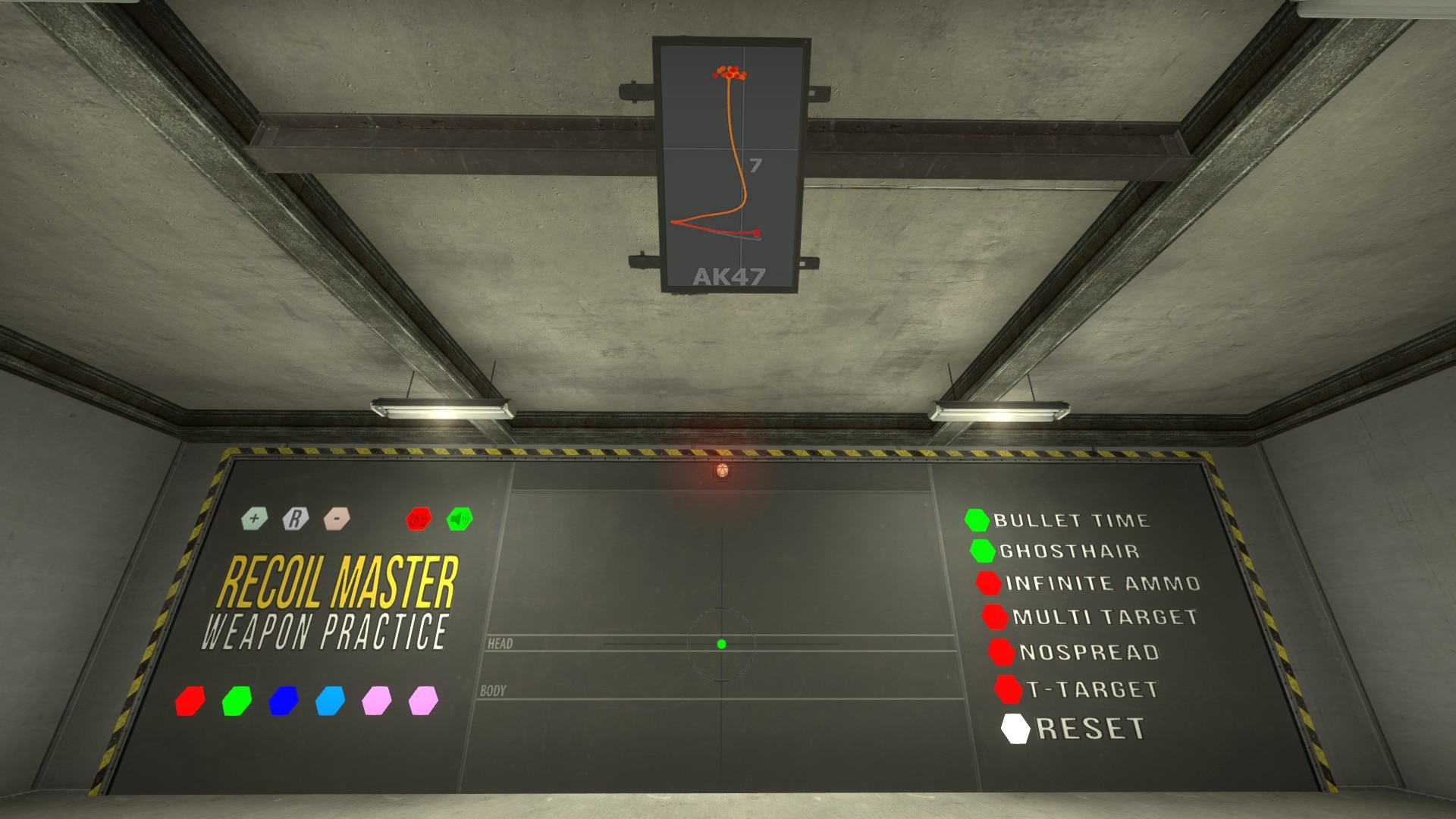
A focused 30-minute session breaks down into three blocks. The first 5-10 minutes isolate just the first 10 bullets of your primary weapon, firing at a blank wall and observing exactly where shots land before adjusting your pull. The next 10 minutes move to full-magazine sprays, tracing a ghosthair overlay from a recoil training map with Follow Recoil enabled before trying the same spray without any visual aid. The final 5-10 minutes verify the training against a moving bot or training dummy, aiming for most shots landing center-mass.
Picking one weapon per session matters more than it sounds. Switching weapons mid-practice splits your muscle memory between two different patterns and slows progress on both rather than speeding either up. Recommended Workshop maps include Recoil Master, Aim Botz, and Crashz' Crosshair Generator, each suited to a different part of the training loop, from raw pattern visualization to live-fire verification against moving targets.
Spray transfer, shifting your spray cleanly from one target to a second nearby target without releasing the trigger, is widely considered harder in CS2 than it was in CS:GO. Practicing it specifically means setting up two or three bots close together and deliberately working the transfer in isolation, rather than hoping it develops naturally from general spray practice.
Best Settings for Spray Control
Lower sensitivity in the range of roughly 1.0-2.0 at standard DPI gives most players more room for fine motor correction during the horizontal phases of a spray, where small overcorrections tend to be punished harder than they are during the vertical climb. Static crosshairs remain standard for competitive play, with Follow Recoil reserved for the learning phase, consistent with how most professional players configure their settings.
Raw input enabled and motion blur disabled are common recommendations for visual clarity during sustained fire, since both reduce the gap between your mouse movement and what you see rendered on screen. A simple, low-detail crosshair avoids visually competing with the recoil pattern itself, which matters more during sustained fire than during single taps.
Common Mistakes and How to Fix Them
Over-spraying at long range is the most common error across skill levels, where players keep holding the trigger past the point where bullet spread has made further hits statistically unlikely. The fix is range discipline: commit to tapping or short bursts beyond roughly 25 meters, regardless of how confident the spray feels in the moment.
Not resetting recoil between bursts is the second major mistake, where a short burst is followed by too brief a pause before firing again, compounding inaccuracy across what should have been two clean bursts. Overcorrecting horizontally during the zigzag phase of weapons like the AK-47 is the third common error, usually from pulling too hard in reaction to the first horizontal swing and needing an even larger correction to recover.
Practicing exclusively against a static wall rather than moving targets builds pattern knowledge without building the tracking skill needed to apply it in an actual gunfight, which is why the verification phase against bots matters as much as the wall-spray phase. Changing sensitivity frequently is the final common mistake, since muscle memory for any pattern is built relative to a specific sensitivity, and altering it resets a meaningful portion of that training each time.
FAQ
Did CS2 change spray patterns in 2026? No. The April 21, 2026 patch notes confirm camera motion during recoil was adjusted to feel more like CS:GO, while bullet trajectories continue to match CS2 unchanged. I found no official source describing a genuine pattern overhaul that month, despite claims circulating from some coaching sites.
Are CS2 spray patterns the same as CS:GO? The underlying shapes are similar but not identical, and CS2's patterns generally execute faster, requiring quicker mouse compensation from players who learned on CS:GO. A May 2025 update also changed how recoil camera movement is rendered, calculating it per frame instead of per tick, which smoothed visual jitter without altering the actual pattern shapes or bullet trajectories.
How long does it take to master a CS2 spray pattern? Most players gain solid control over the first 10-15 bullets of a primary weapon within a few weeks of focused 10-15 minute daily practice. Full mastery across an entire 30-round magazine, including late-spray zigzag phases, is an ongoing process that even professional players continue refining.
What is the best sensitivity for spray control in CS2? Most competitive players use a lower sensitivity in the 1.0-2.0 range at standard DPI, since it provides finer control during the horizontal correction phases of a spray. The right number is ultimately personal, and changing it frequently disrupts muscle memory built around your current setting.
Should beginners use the M4A4 or M4A1-S? The M4A1-S has a lower recoil value (roughly 21 versus 23 for the M4A4) and a quieter sound profile, making its early spray phase more forgiving, but it carries a smaller 20-round magazine and a 600 RPM fire rate compared to the M4A4's 30 rounds and 666 RPM. Beginners wanting maximum sustained-fire capacity often prefer the M4A4, while those prioritizing an easier recoil curve for shorter engagements lean toward the M4A1-S.

Diposting pada di CS2