Eliminating the Enemy Team Doesn't Win a CS2 Rush Round

Publié le dans CS2
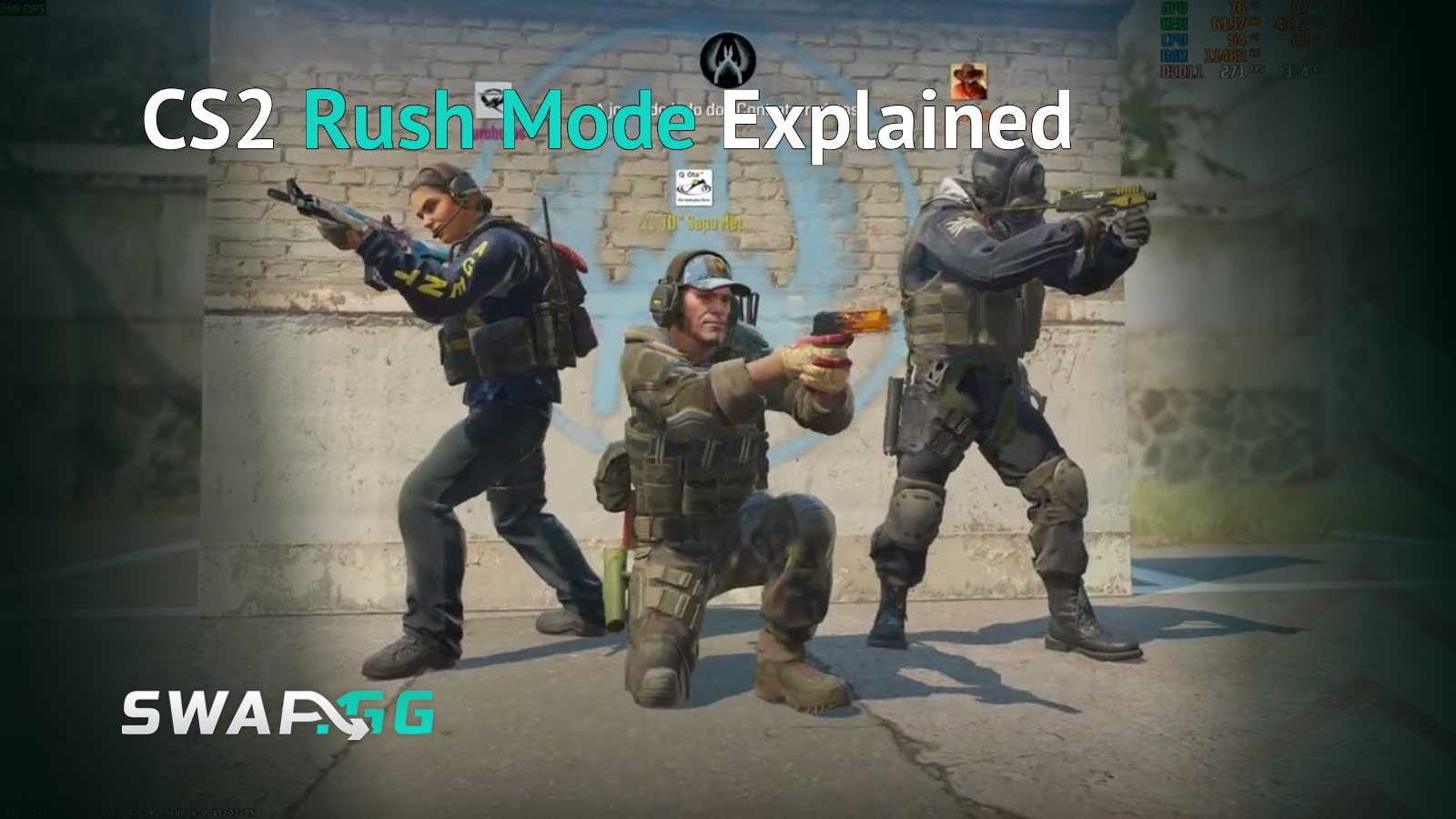
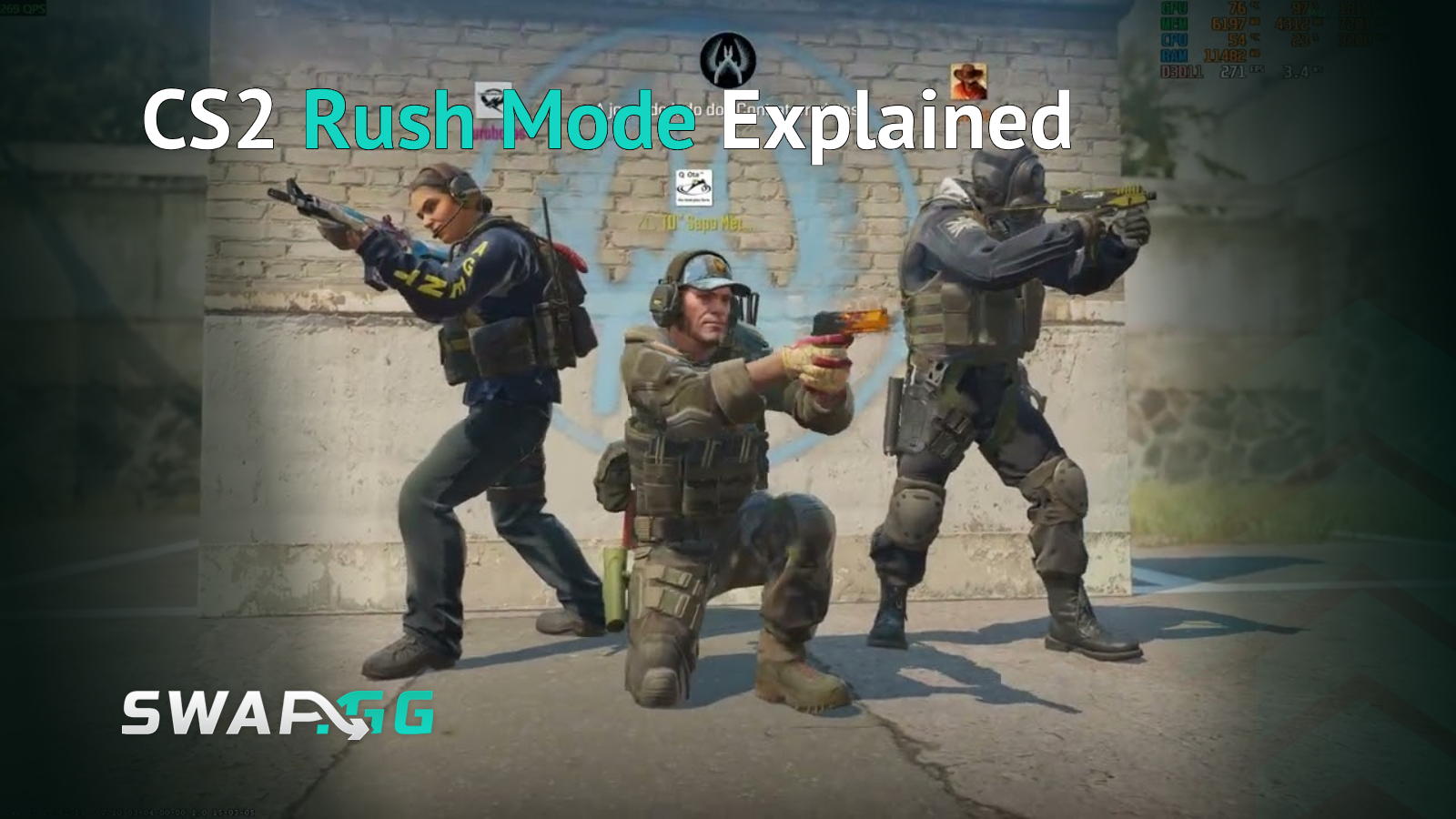
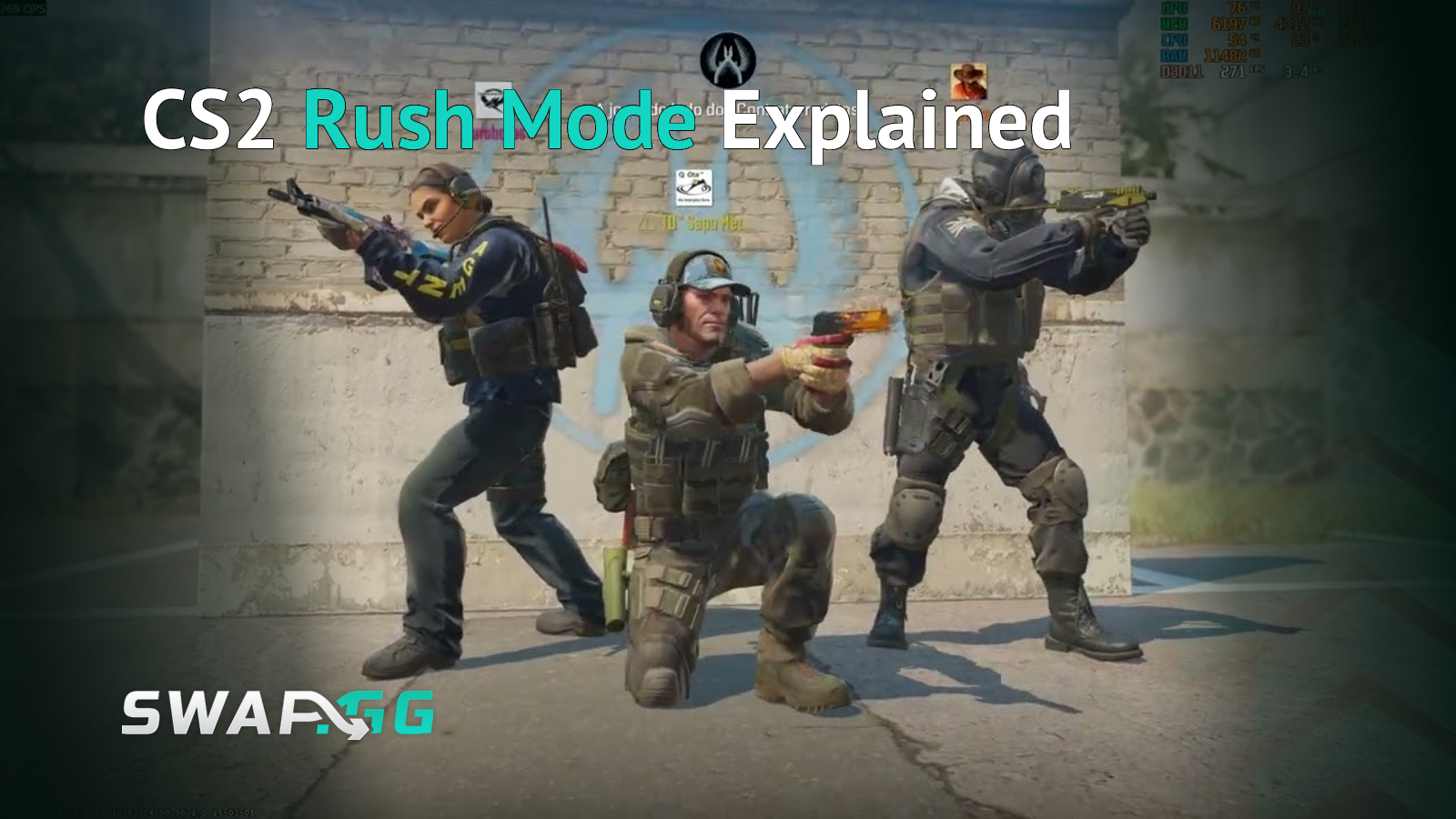
Commonly called the "Rush Hour update" by players and media, Valve's September 22, 2026 patch introduced Rush mode, the first dedicated queued 3v3 format CS2 has added since launch. Two teams of three fight through randomly selected battle arenas toward an enemy castle, and each round is decided by a central tower rather than a bomb plant or a full wipe. The fastest possible win is four rounds in a row, a clean sweep can finish a match in under five minutes, and if you walk into it expecting a smaller Competitive match, the tower rule will cost you rounds before you figure out why.
What Rush Mode Actually Is
Rush is a queued 3v3 mode where teams progress through a chain of randomly selected arenas by controlling a central tower each round. Winning a round pushes the fight one arena closer to the enemy castle. Capturing the tower inside the enemy castle wins the match.
Every Rush match plays out on one hub map called Complex, split into fifteen battle arenas. Each match uses seven of them in a lineup: a neutral starting arena in the middle, intermediate arenas on either side, and a castle at each end. Everything except the castles is pulled at random, so the route changes every time you queue.
The arenas are small, with high ground and crate cover in most rooms, so you can choose between taking an elevated angle or fighting up close from behind a box. Because the arena order changes each match, there's no fixed smoke lineup or default position to memorize. What carries over is aim, positioning, and the ability to read a new room in the first five seconds.
How the Tug-of-War Scoring Works
The tower starts neutral in the middle arena. Win a round and the next fight moves one step toward the enemy castle. Lose a round and the fight gets pushed back toward yours. The progression bar during freeze time shows which room comes next and who owns it, so you can read the route before choosing a weapon.
The match has a hard limit of 15 rounds. If the score reaches 7-7, the decider moves to Convoy, which isn't part of the 15-arena pool at all, a dedicated tiebreaker map built around two moving trains where players can fall off during the fight. If your team is headed there, spend for that round's tower fight, since there's no later round to save for.
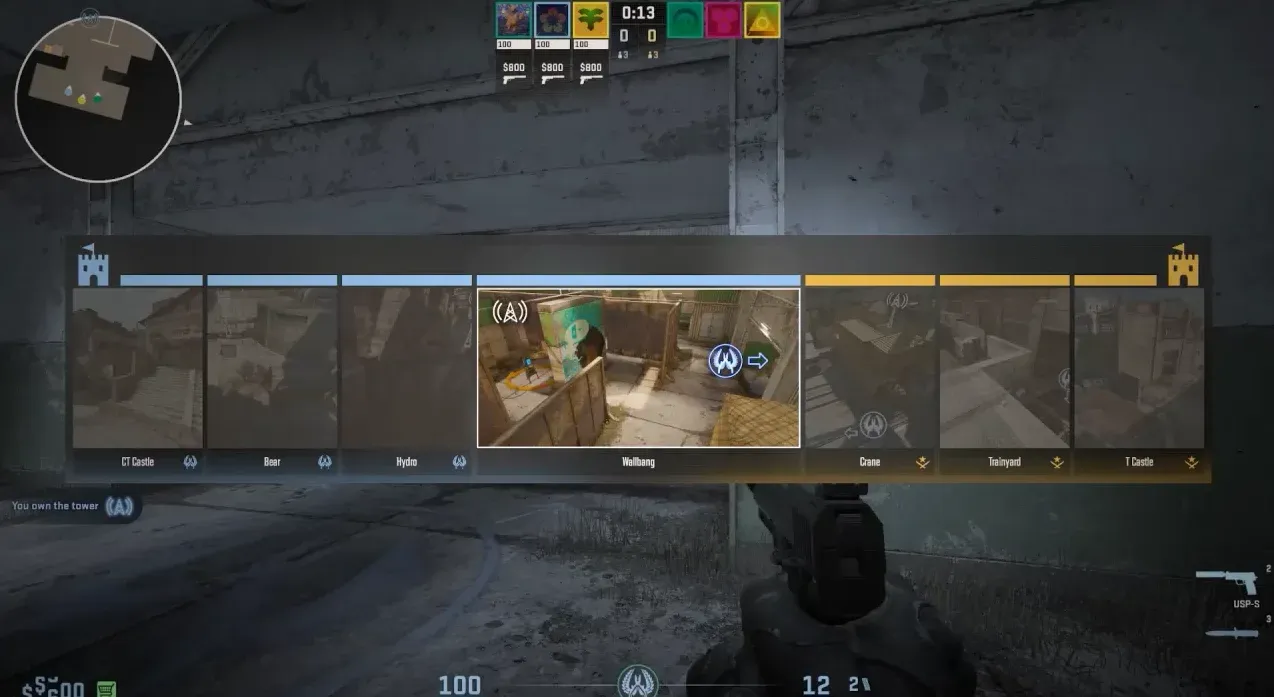
The Tower Rule That Decides Every Round
Eliminating the enemy team doesn't win you the round. Controlling the tower does. The tower belongs to one team at the start of a round, and its light and radar marker show the owner. The other team captures it by pressing the Use key at the tower, and a capture switches ownership immediately, even while shots are still being traded. When time runs out, whoever owns the tower wins.
The scramble to capture the tower after eliminating the enemy is where most new players lose rounds they should have won. If you wipe the enemy team but don't own the tower, a short countdown begins. Valve raised the maximum post-elimination countdown from seven seconds to fourteen seconds on end rooms and Convoy in the September 23 follow-up patch. The countdown doesn't trigger if a team dies through suicides, team kills, or disconnects, so use the live HUD timer as the final cue.
That single rule changes how you should play. Chasing a survivor into a corner while the tower sits undefended is a throw. Trading evenly but never contesting the objective is a slow loss. The players who win Rush consistently are the ones who treat the tower as the only thing on the map that matters.
The Simplified Economy and What to Buy
Rush strips down the economy to fit the pace. There's no full save-round-then-force-buy cycle, because the rounds are too short and the stakes are too immediate.
The one-grenade rule is the most important constraint. You can't carry a full utility set, so every flash or smoke is a decision. A well-placed flash near the tower can decide a round in the first five seconds, but a wasted smoke leaves you with nothing for the fight that actually matters.
Money carries over between arenas, so a lost round doesn't reset your bank. A win on the opening pistol round can fund stronger guns for the next room, while a costly failed buy can leave all three teammates short of rifles when the route shifts back toward your castle. Check your teammates' money and the upcoming room on the freeze-time HUD before every purchase.
Weapon Choice by Arena
The arenas vary enough that the right weapon changes depending on where you're fighting. Sniper rifles are useful in long sightline rooms like Marksman, while shotguns and SMGs perform better in tight spaces like Madhouse or Tunnel. The progression bar tells you which room comes next, so read it during freeze time and buy accordingly.
How to Win 3v3 Matches
Rush rewards a different set of habits than Competitive, and the players who climb fastest are the ones who relearn what a round is actually for.
Control the Tower First, Fight Second
The most common mistake in the first few games is winning the fight and forgetting the objective. If the enemy team owns the tower and you wipe them, the round isn't over until you press the button. Assign one player to watch the tower every round, and call the button the moment the last enemy dies.
Trade Frags Immediately
In a 3v3, the first loss puts your team in a rough spot. There's no room for a player to lurk and hope for a flank while the other two die alone. When a teammate takes a fight, you need to be close enough to trade the kill within a second or two. Playing together isn't a suggestion in Rush, it's the only way to survive the first contact.
Assign Jobs During Freeze Time
Three players can cover the button, an approach, and the trade without splitting into isolated duels. Set a new entry and button call for each randomly selected arena. Read the tower colour on the radar during freeze time, identify which team owns the opening arena, and locate the button before leaving spawn. The button is the attacking side's route target, so the teammate nearest the approach should take the capture job while the other two hold an entry lane and a route into the tower.
Adapt to the Room, Not the Mode
Because the arena order changes every match, there's no muscle memory to fall back on. One round you're clearing a tight corridor, the next you're holding a longer sightline. The players who climb fastest in Rush are the ones who can read a new room in the first five seconds and adjust their positioning accordingly.
Is Rush Too Chaotic to Take Seriously?
The most common complaint about Rush is that it's too chaotic to be taken seriously, and there's something to that. The random arena rotation means no map gets the kind of tactical depth that makes Competitive or Premier worth the time investment, and a mode where four straight round wins can end a match in under five minutes doesn't leave much room for the comeback stories that make Counter-Strike dramatic. If you're the kind of player who wants to learn a map, build lineups, and win through preparation, Rush offers you almost none of that.
We're not convinced that's a problem. The value of Rush isn't that it replaces the tactical mode, it's that it compresses the parts of Counter-Strike that are fun into a format you can play with two friends on a weeknight without committing to a forty-five minute match. The randomness is the point, and the players who enjoy it aren't the ones who wanted another Competitive.
FAQ
What is Rush mode in CS2?
Rush is a 3v3 queued mode added in the September 2026 Rush Hour update. Teams fight through randomly selected arenas toward the enemy castle, and each round is decided by who controls a central tower rather than who gets the most kills.
How many arenas are in Rush mode?
There are fifteen arenas in the pool, including Spire, Wallbang, Big Box, King of the Hill, and CT Assault. Each match uses seven of them, with T Castle and CT Castle always serving as the endpoints. Convoy isn't part of the 15-arena pool; it's a dedicated tiebreaker map used only if the score reaches 7-7.
Do you need Prime to play Rush?
Rush appears in the standard matchmaking queue alongside other official modes. Prime status may affect progression rewards and matchmaking restrictions, so check the in-game queue and your account status if Rush doesn't appear.
How long does a Rush match last?
A clean sweep takes four consecutive round wins, which can finish a match in under five minutes. Even a closely contested match rarely lasts more than fifteen rounds, and a 7-7 score triggers a final round on Convoy.
What happens if you eliminate the enemy team but don't control the tower?
You get a short countdown to capture it, raised to fourteen seconds on end rooms and Convoy in the September 23 patch. If you fail to press the button before the timer expires, you lose the round despite the elimination.

Publié le dans CS2