How to Get the 2025 Service Medal in CS2

tarihinde, CS2 kategorisinde yayınlandı
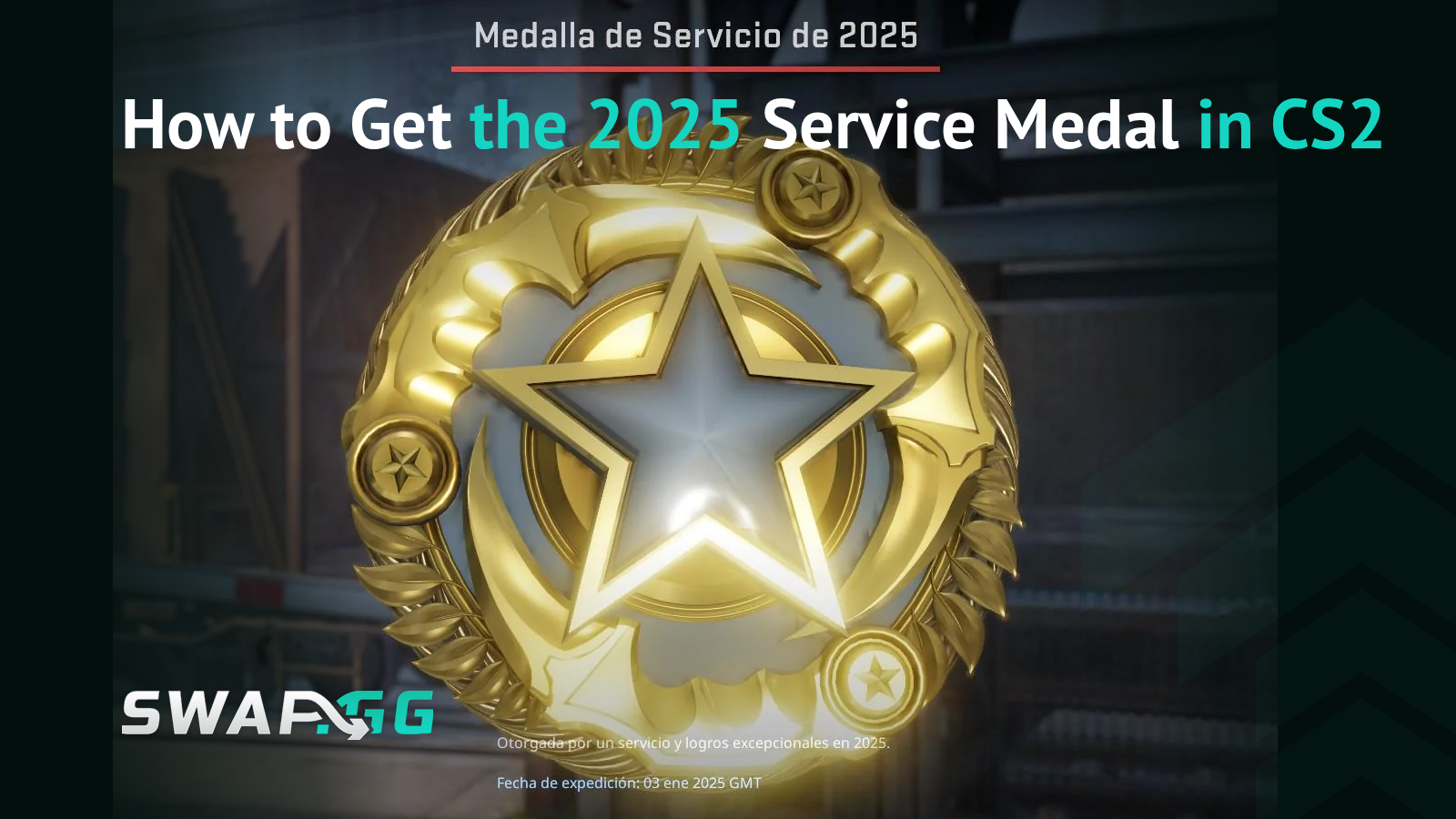
Valve dropped the 2025 service medals in January, and the community's already split between casual collectors aiming for their first gray medal and hardcore grinders chasing that elusive red tier. Those two goals require completely different approaches because CS2's XP system rewards weekly consistency over marathon sessions.
Getting your first medal takes maybe 60-80 hours of smart grinding, but upgrading through all six color tiers demands sustained commitment across the entire year. If you're wondering whether that red medal is realistically achievable or just trying to figure out which game modes won't waste your time, this guide breaks down the actual requirements, the math behind weekly XP bonuses, and why your grinding strategy needs to change every Wednesday.
Understanding the Medal System
CS2 features six service medals in 2025, each with a different color based on how many times you've reset your rank. The progression works like prestige systems in other games, but without the gameplay bonuses that actually make prestige worth pursuing.
You earn your first medal by reaching rank 40 (Global General) and choosing to reset your profile. Your rank drops back to one, and the cycle repeats with each subsequent rank 40 reset upgrading your medal to the next color in the sequence.
The color progression runs from gray to green, then blue, purple, orange, and finally red. That red medal requires hitting rank 40 six times in a single calendar year, which translates to roughly 240 levels worth of XP when you add up the full journey. Most players never see red because maintaining that pace across twelve months requires consistency that real life tends to interrupt.

The XP Requirements
You need 5,000 XP per level. Multiply that by 40 levels, and you're looking at 200,000 XP for a single medal. Want all six colors? That's 1.2 million XP across the year, which sounds absurd until you realize the weekly bonus system essentially gates your progress regardless of how much free time you have.
Every Wednesday, you get a fresh pool of 5,000 bonus XP that completely changes your grinding efficiency. The first 3,500 XP comes with a 3x multiplier, and the remaining 1,500 gets a 1x bonus before you hit the reduced XP rates that make extended sessions feel punishing. This structure means consistent weekly play matters significantly more than marathon grinding sessions where you burn through content on Saturday and then wonder why Sunday's matches feel unrewarding.
Two to three hours each week captures most of the bonus XP before diminishing returns kick in, which makes service medal grinding more accessible than it initially appears. The challenge isn't finding 20 hours to play in a single week, it's maintaining that 2-3 hour weekly commitment across months without falling behind.
Best Modes for XP Grinding
The math on XP rates gets complicated because different modes reward different actions, and the obvious choices often underperform compared to what the community has figured out through testing. Competitive seems like the natural pick with its 30 XP per round won, but match length consistently ruins the efficiency regardless of your win rate.
Deathmatch
Deathmatch gives you XP by dividing your total score by five, with a 200 XP cap per match that you'll hit in about 10 minutes of focused play. Matches run constantly with zero downtime between rounds, and you're getting consistent action rather than waiting for bomb plants or retake setups. Players tracking their rates report around 9-10 XP per minute on Deathmatch servers, which makes it the baseline efficiency standard for pure grinding.
Arms Race
Arms Race converts your match score to XP at a 1:1 ratio and caps at 300 XP for dominant performances. Skilled players who consistently top the server will earn XP faster in Arms Race than Deathmatch because that 300 XP cap combined with shorter match times creates better rates, but that edge disappears if you're finishing mid-pack. The mode rewards mechanical skill and game sense in ways that Deathmatch doesn't, so your mileage varies based on actual performance rather than just participation.
Competitive
Competitive has its place despite the time investment concerns. You need to win about three matches or balance two wins and two losses to maximize your weekly bonus XP, which means you can't ignore ranked entirely if you're optimizing the grind. The problem shows up when matches stretch past 40 minutes and end in one-sided losses, you're looking at maybe 180 XP for an hour invested, which is roughly half the rate you'd get from cycling through Deathmatch servers.
Wingman
Wingman splits the difference by offering 15 XP per round won in matches that typically last 15-30 minutes. The 2v2 format means your individual impact matters more than in 5v5, and coordinating with one teammate is considerably simpler than trying to organize four randoms through voice chat. If you find standard competitive exhausting but want something with more structure than casual modes, Wingman offers decent XP rates without the time commitment or frustration factor.
Maximizing Your Weekly Grind
Start each week with the goal of claiming that 5,000 XP bonus before the next Wednesday reset, then reassess whether additional playtime makes sense. Focus your sessions around the bonus period rather than spreading them evenly across seven days, which creates natural breaks that help prevent burnout while keeping your XP gains efficient.
Warm up on Deathmatch for 30-45 minutes to claim the easiest portion of your weekly XP, then switch to Arms Race or Competitive depending on whether you prefer mechanical challenges or tactical gameplay. Three hours of mixed content each week keeps you on pace for steady level-ups without hitting the XP reduction penalty hard enough to make continuing feel pointless.
The reduction penalty deserves emphasis because it fundamentally changes whether extended sessions make sense. After depleting your bonus XP pool, matches that normally grant 390 base XP might only yield 100 XP or less, representing a roughly 75% drop in efficiency. Playing beyond that point makes sense only if you genuinely enjoy the matches rather than viewing them as a means to an end.
What Doesn't Count
Community servers don't award XP regardless of how competitive or well-run they might be. FACEIT doesn't count toward your medal progress, and neither does ESEA. You need to play exclusively on official Valve servers for XP to accumulate, which creates genuine tension for players who prefer third-party platforms for their superior anti-cheat systems or higher average skill brackets.
Leaving matches early results in XP penalties that stack with the competitive cooldown system, so you're committing to finish what you start even when matches turn ugly. Abandoning competitive games hits particularly hard because the cooldown can lock you out of ranked play for hours or days depending on your offense history, effectively killing your XP grinding momentum for that week.
The Medal Display
You can display service medals through the inventory system where they become visible on your profile and in pre-game lobbies. The display is the entire point since medals provide zero gameplay value, they exist purely as cosmetic signals of time investment and completion goals.
Medals don't carry over between years, which creates artificial urgency around the annual grind. The 2025 medals will disappear when 2026 rolls around, replaced by new designs that restart the color progression from scratch. This reset means collectors who want every year's medals need to maintain the grind annually, and each year's medal features distinct artwork that won't be available again once that calendar year ends.

Is It Worth the Time?
It really depends on your goals, because getting all six colors requires hitting rank 40 six times in one year, which translates to hundreds of hours that you could spend improving at the game instead. Service medals provide zero competitive advantages, as they're pure cosmetics signaling time investment.
If you're already playing CS2 regularly, the medals accumulate naturally without dedicated grinding. If you're forcing yourself to play purely for medals, you'll probably burn out before hitting purple. The red medal remains rare because most players can't maintain one rank reset every two months across an entire year without life getting in the way.
Starting Your Journey
The 2025 medals became available January 1st, so calculate whether your target tier remains achievable with the time remaining. Six medals across twelve months means averaging one reset every two months, starting in June puts red medals out of reach, but gray through purple remain realistic depending on your weekly availability.
Make sure to focus on the weekly bonus cycle as your primary pacing mechanism. In addition, track your progress through the in-game rank display, and when you hit 40, the option to claim your service medal appears and resets your rank back to one. Mix modes to prevent burnout, because pure Deathmatch for 200 hours sounds miserable regardless of how efficient the XP rates might be on paper. The medals won't make you a better player or improve your competitive standing, but if you've already decided to invest significant time in CS2, they give you something concrete to show for it.

tarihinde, CS2 kategorisinde yayınlandı