Are CS2 Skins a Good Investment After the October 2025 Crash?

Publicat pe în CS2
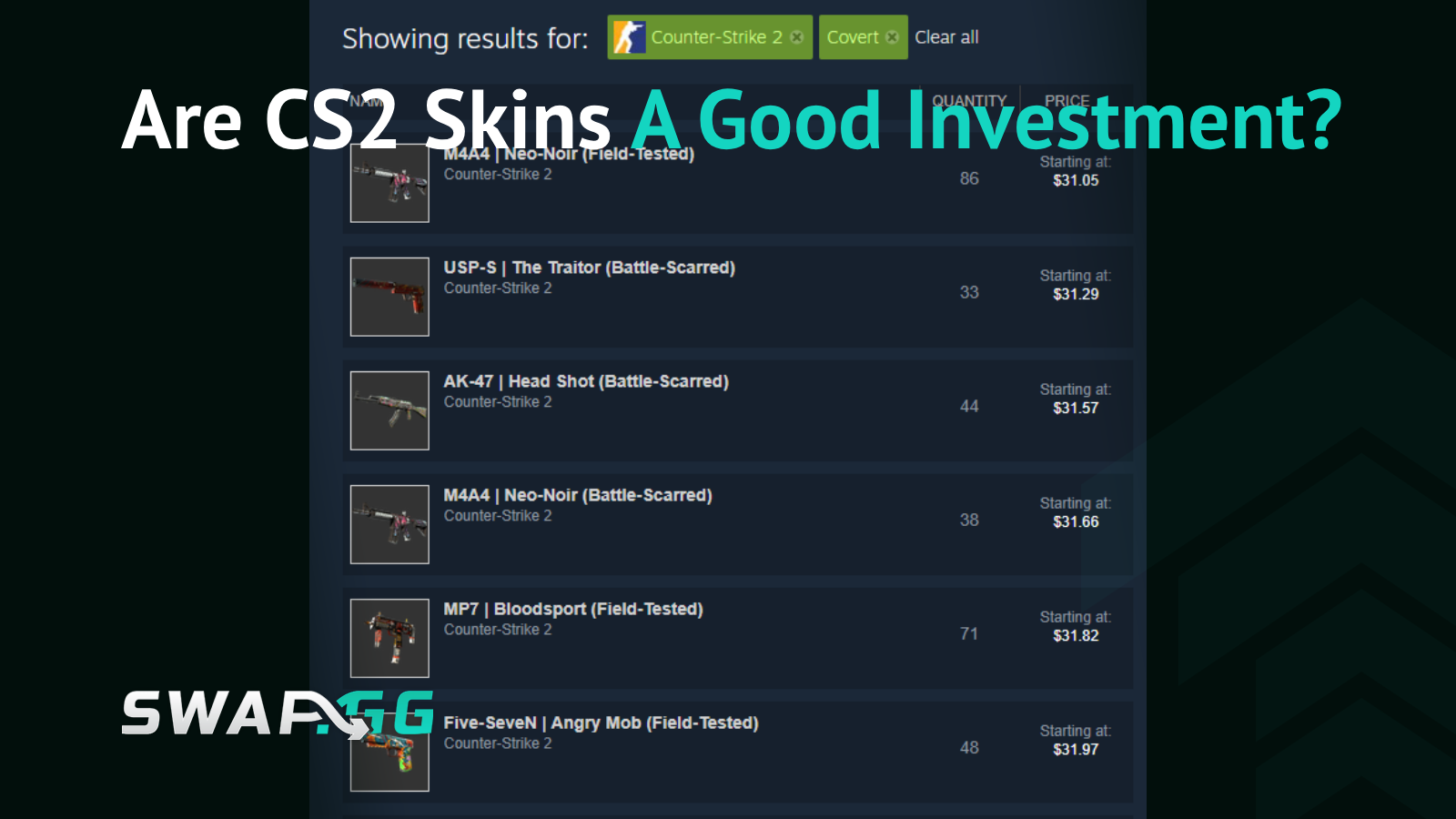
Researchers at HSE University put the average annual return on CS:GO and CS2 skins at 41.2% between 2013 and 2024, with a risk-adjusted score that beat Bitcoin, US stocks, and gold. Their paper cleared peer review in January 2026 and the numbers inside it hold up. They also describe a market that stopped existing on October 22, 2025, when one trade-up rule change wiped out roughly $2 billion in about thirty hours. A CS2 skins investment earns its place as a small slice of a portfolio for someone who already plays and can wait years, and it falls apart as a home for money you might need. Both the study and the crash are true, and they aren’t measuring the same thing.
What the HSE Study Actually Found
Nobody has published a more rigorous public analysis of skin returns. The HSE team ran more than a decade of price data and found that skins outperformed every major traditional asset once you adjust for volatility.
Sharpe ratio measures return per unit of volatility, so a higher number buys you more reward for the risk you took. Skins beat everything on that measure across the study window, and the researchers concluded they behave as a legitimate alternative asset class with return characteristics that diversify a traditional portfolio.
Because Sharpe ratio treats volatility as smooth and symmetric, it averages the up moves against the down moves and tells you nothing about their shape. October 2025 didn’t move smoothly. One patch note repriced the whole market overnight, and no average taken across eleven years prepares a holder for that.
One Patch Note Repriced the Entire Market
On October 22, 2025, Valve let players trade five Covert-rarity skins for a knife or a pair of gloves. The intent was to open a route to high-tier items without depending on a 0.26% case drop rate. It collapsed the scarcity premium that had held knife and glove prices up for a decade.
Knife and glove prices roughly halved within days, and some items shed 70% or more. Total estimated market value fell from $5.9 billion to $4.2 billion overnight, and by the time selling stopped somewhere between $1.7 and $2.5 billion had gone. Recovery ran ten months.
That recovery carries the strongest argument anyone can make for holding through a crash, and it deserves a straight answer rather than a wave of the hand. Every drawdown in this market has been temporary so far, and holders who did nothing finished ahead of holders who panicked.
The argument only pays if your horizon outlasts the recovery. Buy at the October peak, need cash in November, and you eat a 30% loss in a market with no circuit breakers, no trading halts, and nobody who can force a platform to honor a price.
How Skins Compare to Stocks, Gold, and Bitcoin
A Butterfly Knife Fade bought for about $400 in 2015 sells for around $5,000 today. Set it beside the obvious alternatives and the picture gets complicated fast.
Bitcoin wins on raw multiple and it isn’t close. HSE never claimed otherwise, since their whole argument runs on volatility-adjusted return, where the ride came out smoother for each dollar of profit. That distinction earns its keep when you’re allocating a portfolio. It earns almost nothing when you’re trying to turn $500 into $50,000.

Gold and the S&P 500 lose by a wide margin over the same decade. An AK-47 Fire Serpent returned roughly 27% between mid-2025 and mid-2026, in a year when most items moved by single digits.
The Risks the Study Couldn’t Measure
Price history models price history, and the three things most likely to cost you money here have never shown up in it.
Valve Risk
Valve changes rules whenever it wants, and no appeals process exists. October 2025 was the clearest demonstration rather than the only one. Trade Protection arrived in July 2025 with a seven-day reversal window on every player trade, and third-party marketplaces had to rebuild their inventory flows around it. Holders get no warning and no recourse.
Liquidity Risk
The S&P 500 turns over about $400 billion in a day. Across a full year, every CS2 platform combined handles roughly $4.2 billion. Selling a $5,000 knife means waiting for one of a small number of collectors to notice your listing, not competing with thousands of buyers posting limit orders.
Spreads widen sharply in a selloff. During October some items lost their listings entirely, because sellers pulled inventory rather than take the new price, and whoever needed cash that week sold to whatever handful of buyers remained.
Regulatory Risk
In 2026 the New York attorney general and plaintiffs in a federal class action accused Valve of facilitating illegal gambling through cases. Brussels has been preparing a Digital Fairness Act that may cover loot boxes, and PEGI now hands a minimum 16+ rating to any game with paid randomized items. None of that has changed the law yet. Should one of them land, the legal ground under the whole skin economy moves in ways nobody can price today.
Who Skins Actually Make Sense For
In our view, anyone working with a horizon shorter than two years isn’t investing in this market at all, whatever the Sharpe ratio says. A skin position concentrates your money in one company’s decisions, and Valve doesn’t need your permission to change them.
Traders watching charts didn’t make the money here over the past decade. Players did, by buying items they liked, holding them for years, and sitting still while everyone else sold. That behaviour sits closer to collecting than to investing, and the gap between those two words decides everything, because a collector can wait out a crash and an investor with a deadline can’t.
FAQ
Are CS2 skins a better investment than stocks?
Between 2013 and 2024 they beat US stocks on a risk-adjusted basis, 0.34 against 0.25 on Sharpe ratio. That edge arrives attached to risks stocks don’t carry, including single-company patch risk and thin liquidity.
What happened to CS2 skin prices in October 2025?
Valve let players trade five Covert skins for a knife or gloves on October 22, 2025. Knife and glove prices fell 50% to 70% within days, and total market value dropped from $5.9 billion to $4.2 billion. It took until mid-August 2026 to climb back to roughly $7 billion.
Can CS2 skins crash to zero?
Everything here rests on Valve continuing to run Counter-Strike and maintain the item economy. Shut down trading or the game and skin values collapse. It’s unlikely in the short term, and it’s still the tail risk that separates skins from stocks, bonds, or gold.
How liquid is the CS2 skin market?
Annual volume runs around $4.2 billion across every platform, which sounds large until you set it beside a single day on the S&P 500. High-value items can have very few buyers at any given moment, and spreads widen during selloffs.
Should I put my savings into CS2 skins?
No. There’s no regulatory protection and no guarantee of liquidity. If you already play and you have money you can afford to lose, holding a few items you like is reasonable, and thousands of holders found out in October 2025 what happens when skins get treated as a savings account.

Publicat pe în CS2