Why Is CS2 So Popular

Опубликовано в CS2
Counter-Strike 2 hit 1.86 million concurrent players in April 2025, breaking the franchise's all-time record for the third consecutive month. For a game built on mechanics that haven't fundamentally changed since 1999, that growth seems almost impossible in an era dominated by battle royales and hero shooters with constant content updates.
So what keeps millions of players coming back to a tactical 5v5 shooter that asks them to do essentially the same thing they were doing two decades ago? The answer involves a rare combination of accessible gameplay, competitive depth, a thriving esports ecosystem, and an economy that turned virtual weapon skins into legitimate investment vehicles.
Straightforward Gameplay That Takes Years to Master

Counter-Strike's core premise is dead simple: two teams, one objective, no respawns until the round ends. Terrorists plant bombs or take hostages while Counter-Terrorists try to stop them. You can explain the basics to someone in under a minute, and they can jump into a match immediately without needing to learn dozens of character abilities or memorize complex item builds.
That accessibility masks an enormous skill ceiling that players are still pushing after thousands of hours. Every weapon has unique spray patterns and recoil behaviors that require dedicated practice to control. Movement mechanics punish players who shoot while running. Map knowledge, utility usage, economy management, and team coordination all compound into a game where there's always something new to learn.
Valve's official Counter-Strike account put it best: the game takes minutes to understand and a lifetime to master. The feeling when everything comes together, whether it's a perfect spray transfer, a clutch 1v3, or a perfectly executed site take, never gets old because you earned it through practice rather than through unlocking a better loadout.
Pure Skill, Zero Pay-to-Win
Unlike many modern multiplayer games where premium purchases can provide gameplay advantages, Counter-Strike keeps competition entirely fair. Your aim, game sense, and teamwork determine outcomes, not your wallet.
Skins change how your weapons look but don't affect their stats. A player using default weapon models has exactly the same capabilities as someone with a $10,000 knife. This matters because it means every kill you get and every round you win comes down to skill and decision-making rather than who spent more money on upgrades.
For players tired of games where grinding or spending feels mandatory to stay competitive, Counter-Strike offers a refreshing alternative. Your progress is measured entirely by how much better you've gotten at the actual game, not by how many hours you've put into unlocking items or how much you've spent on boosters.
An Esports Scene That Shaped the Industry

Counter-Strike didn't just participate in esports history. It helped create it. The Cyberathlete Professional League held the first major international Counter-Strike tournament back in 2001, and the competitive scene has grown continuously ever since.
In 2025, Counter-Strike distributed over $32 million in tournament prize money, a 41.5% increase from the previous year and more than any other esport. Major championships from organizers like ESL, BLAST, and PGL run throughout the year, giving fans a near-constant stream of high-level competition to watch.
What makes Counter-Strike esports particularly compelling is how readable it remains even at the professional level. Unlike MOBAs where teamfights can become visual chaos, a clutch situation in Counter-Strike unfolds with clarity. Viewers can follow exactly what's happening, understand the decisions players are making, and appreciate the mechanical skill required to execute under pressure. That accessibility draws casual viewers while the strategic depth keeps hardcore fans analyzing matches and debating optimal plays.
Community-Built Content That Never Stops
Counter-Strike wouldn't exist without its community. The original game started as a Half-Life mod created by two fans, and that grassroots spirit has defined the franchise ever since.
Steam Workshop hosts thousands of custom maps, from competitive alternatives to wild creations like surf maps, zombie modes, and aim training courses. Community servers offer experiences that official matchmaking doesn't provide, letting players practice specific skills or just mess around with friends in custom game modes.
Third-party platforms like FACEIT provide competitive alternatives for players who want stricter rulesets or better anti-cheat protection. Content creators produce tutorials, highlight reels, and analytical breakdowns that help newer players improve while keeping veterans engaged with the evolving meta.
This self-sustaining ecosystem means Counter-Strike doesn't rely entirely on Valve for fresh content. The community fills gaps, creates solutions, and keeps the game vibrant even during periods when official updates are sparse.
Strategic Depth Beyond Raw Aim
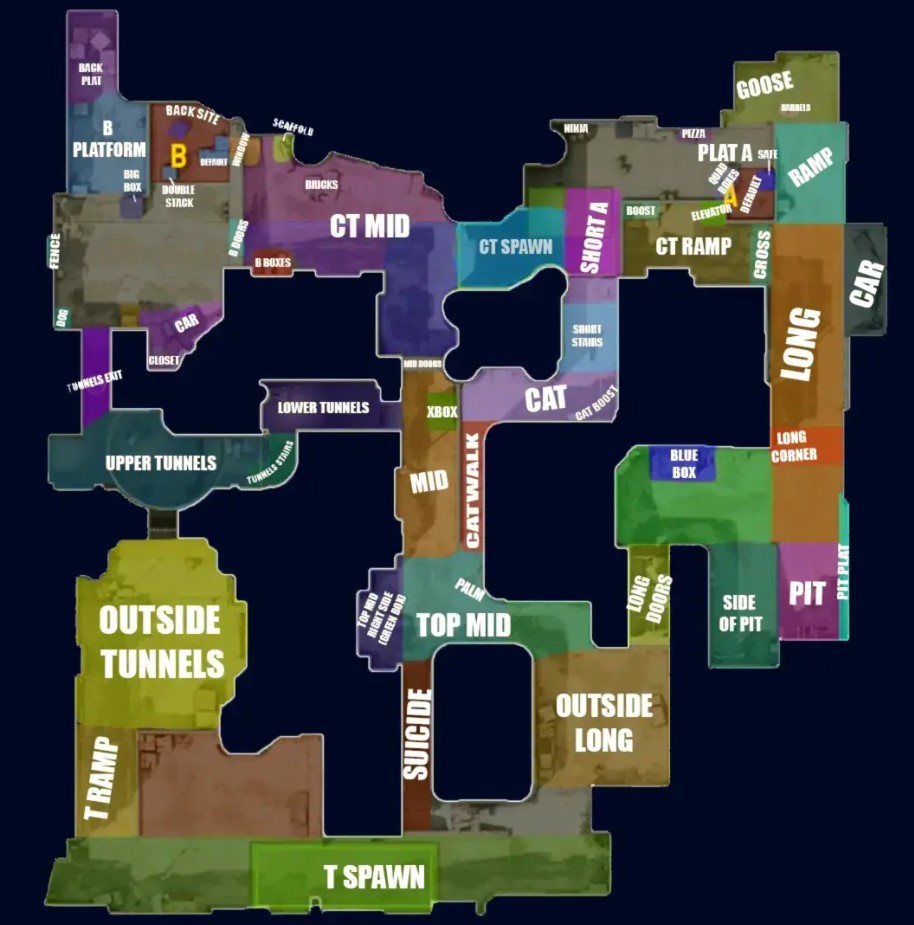
You could be the best shot in any lobby and still lose consistently if you're not working with your team. Counter-Strike rewards coordination, communication, and planning as much as mechanical skill.
Every round involves economic decisions about what weapons and utility to buy, positional choices about where to play and when to rotate, and tactical calls about whether to execute a planned strategy or adapt on the fly. Reading your opponents, anticipating their setups, and exploiting their tendencies matters just as much as hitting your shots.
The focus on teamwork creates experiences that solo-focused shooters can't replicate. A perfectly executed site take where everyone hits their timings and utility lands exactly where it needs to feels incredible because it required five people working in sync. Those moments of coordination are what keep teams playing together for years and what makes watching professional matches so engaging.
Updates That Preserve What Works
Valve takes a conservative approach to changing Counter-Strike, and that restraint has become one of the game's greatest strengths.
Other competitive games constantly rotate their metas through balance patches, new characters, or map changes. Counter-Strike's core gameplay has remained remarkably stable, with updates focused on refinement rather than reinvention. The smoke grenades in CS2 behave differently than they did in CS:GO, but the fundamental skills you developed in previous versions still apply.
This consistency allows players to accumulate mastery over years rather than having their knowledge invalidated by sweeping changes. Professional players like s1mple and device maintained dominance for nearly a decade because the game they mastered early in their careers still plays largely the same today. That stability creates generational talent and lets strategic innovations accumulate organically within the community.
A Skin Economy Worth Billions
When Valve introduced weapon skins in 2013, nobody predicted they would become investment vehicles that Bloomberg would eventually compare to stocks and cryptocurrency. Yet here we are, with some rare skins selling for hundreds of thousands of dollars and the case-opening economy generating nearly a billion dollars annually for Valve alone.
The skin system transforms Counter-Strike from a pure shooter into something closer to a collecting game for a significant portion of its playerbase. Some players queue for the competition. Others launch the game primarily to open cases hoping for that rare knife drop. A third group treats their inventory as a portfolio, buying and selling based on market trends and rarity speculation.
Counter-Strike co-creator Minh Le offered a blunt assessment in a recent interview: people play it just to collect skins. Whether you view that as brilliant game design or a concerning gambling element probably depends on your perspective, but the engagement numbers speak for themselves.
Accessibility Without Compromise
Counter-Strike has always run on modest hardware, and CS2 continues that tradition despite upgrading to the Source 2 engine. The game performs smoothly on integrated graphics and older systems that would struggle with more visually demanding shooters.
This technical accessibility opens doors to players in regions where high-end gaming PCs aren't common. Combined with the free-to-play model that removes purchase barriers entirely, Counter-Strike can reach player pools that many competitors simply can't access.
The game also respects your time in ways that modern live-service titles often don't. There's no battle pass forcing daily login streaks, no seasonal content that expires if you don't play enough, no fear of missing out on limited-time events. You can step away for months and return to find your skills and knowledge still relevant.
The Bottom Line
Counter-Strike's popularity after 25 years comes down to a formula that most developers never crack: accessible entry, infinite skill ceiling, fair competition, and a community that sustains itself. The esports scene provides aspirational content and prize money that validates competitive play. The skin economy keeps collectors and traders engaged alongside pure competitors. And through it all, the core gameplay remains what it's always been: a test of aim, strategy, and teamwork that rewards the time you invest in getting better.
The game doesn't need to reinvent itself every season because what it does has worked for a quarter century. When your foundation is that solid, you just need to keep refining the details.

Опубликовано в CS2